
Protecting Your Outdoor Condenser from Flooding and Storm Surges in Ojus
When storm season hits South Florida the last thing you want is to find your AC condenser submerged in saltwater or storm surge. In Ojus and surrounding North Miami Beach areas the combination of high tides heavy rainfall and hurricane-driven flooding puts expensive outdoor HVAC equipment at serious risk. A flooded condenser means not only costly repairs but also weeks of uncomfortable downtime in Miami’s relentless heat and humidity. How to Get Your Miami Lakes HVAC System Ready for the Summer Heat.
Why Miami Flood Zones Put Your AC at Risk
Miami-Dade County includes multiple FEMA-designated flood zones where properties face varying levels of flood risk. Areas near Ojus fall into zones A AE and VE where Base Flood Elevation (BFE) requirements dictate how high equipment must sit above ground. When storm surge pushes water inland it brings corrosive saltwater that destroys electrical components copper tubing and aluminum fins in hours. Fresh rainwater flooding is damaging enough but saltwater exposure accelerates corrosion tenfold leading to premature system failure. FEMA flood maps.
The problem compounds in neighborhoods with older infrastructure where drainage systems cannot keep pace with sudden deluges. In low-lying sections of Ojus and North Miami Beach even a Category 1 storm can produce enough surge to reach outdoor units. Once water infiltrates the electrical compartment it can short out the compressor fan motor and control board turning a $3000+ condenser into a total loss. The Best Air Purification Systems for Luxury Pinecrest Estates.
FEMA and Miami-Dade County Elevation Requirements
Building codes in Miami-Dade’s flood zones require HVAC equipment to be elevated above the BFE. For most of Ojus that means raising condensers at least 12 to 24 inches above the finished floor or adjacent grade. In VE zones along the coast the requirement jumps to 36 inches or more depending on the specific flood map panel. These aren’t suggestions—they are enforceable code requirements backed by FEMA and the South Florida Water Management District. Miami-Dade County permitting.
Professional elevation involves more than just placing the unit on blocks. Contractors must install hurricane-rated stands or concrete pads that meet Miami-Dade’s High Velocity Hurricane Zone (HVHZ) standards. These stands must withstand sustained winds over 140 mph and resist uplift from storm-generated pressure changes. The mounting hardware itself must be stainless steel or galvanized to prevent rust in the salt-air environment. HVAC Miami Lakes.
Local permitting adds another layer. Any elevation project in a flood zone requires a permit from Miami-Dade County and often approval from the local municipality. The process includes submitting engineered drawings showing the new pad height tie-down methods and drainage improvements. Skipping permits risks fines and can void manufacturer warranties if the installation does not meet code.
Top Three Solutions for Flood-Proofing Your AC
1. Professional Elevation on Hurricane Stands
The most common and cost-effective solution is mounting the condenser on a factory-engineered aluminum or galvanized steel stand. These stands bolt directly to the condenser’s base and elevate it 18 to 36 inches above grade. Aluminum stands resist corrosion and are lightweight enough for most technicians to install in a few hours. Concrete pads offer greater stability in high-wind zones but require more labor and curing time.
2. Relocation to Rooftops or Elevated Platforms
For properties with severe flooding history or limited ground space moving the unit to the roof eliminates most water risk. This approach requires structural evaluation to ensure the roof can support the weight plus wind loads. In multifamily buildings or homes with flat roofs rooftop relocation is often the best long-term protection. The trade-off is higher installation cost and the need for refrigerant line extensions.. Read more about How to stop your AC from leaking water into your Westchester home during heavy rain.
3. Protective Flood Barriers and Enclosures
Deployable barriers such as water-filled cofferdams or inflatable seals can shield existing units during a storm warning. These systems install quickly and can be stored when not in use. Permanent enclosures made of marine-grade aluminum or stainless steel offer continuous protection but must be designed to allow proper airflow. Barriers work best as a supplement to elevation rather than a standalone solution.
The Importance of Salt-Air Resistant Coatings
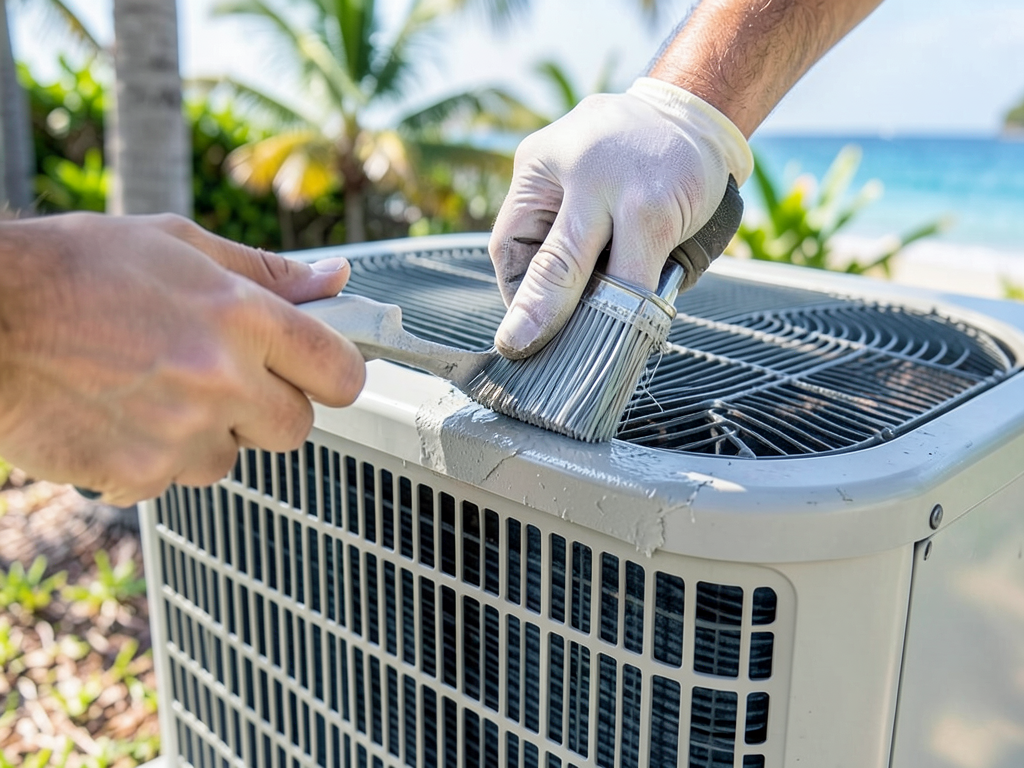
Miami’s coastal proximity means salt-laden air corrodes metal surfaces year-round. Even with elevation saltwater spray during high winds can reach elevated units. Applying a marine-grade anti-corrosion coating to the condenser’s exterior creates a protective barrier against pitting and oxidation. These coatings typically contain zinc or epoxy resins and must be reapplied every two to three years for maximum effectiveness.
Manufacturers also offer coastal-grade units built with corrosion-resistant materials from the factory. These units feature aluminum fins with a hydrophobic coating and stainless steel hardware throughout. While more expensive upfront they can extend equipment life by five to ten years in harsh coastal environments. For properties within five miles of the Atlantic investing in a coastal-grade condenser often pays for itself in avoided replacement costs.
Cost vs. Benefit Analysis
Elevating an existing condenser on a hurricane stand typically costs between $800 and $1500 depending on height and local permitting fees. Relocating to a rooftop can run $2500 to $5000 when factoring in structural reinforcement and line extensions. By comparison a full condenser replacement after flood damage runs $2500 to $4000 for a standard unit and up to $6000 for high-efficiency models. Add the cost of water extraction mold remediation and temporary cooling solutions and the total can easily exceed $10000.. Read more about Is a rooftop AC unit actually better than a ground unit for your Bal Harbour property?.
Beyond the immediate repair costs there’s the hidden expense of downtime. In Miami’s summer heat a failed AC can make a home uninhabitable within hours. Hotels temporary rentals and lost productivity add up quickly. For businesses the cost of downtime includes spoiled inventory lost customers and potential code violations if indoor temperatures exceed safe limits. Elevation is not just a maintenance expense—it’s an insurance policy against catastrophic loss.
Post-Flood Recovery and Maintenance
If your condenser does flood the first step is to shut off power at the breaker and contact a licensed HVAC technician. Never attempt to restart a flooded unit; internal damage may not be visible and can cause electrical fires. A technician will inspect the electrical compartment test the compressor and evaluate the coils for corrosion. In many cases the unit can be restored with cleaning and component replacement but saltwater exposure often necessitates full replacement.
Regular maintenance helps catch early signs of corrosion before they become failures. Annual inspections should include checking for rust on the stand inspecting electrical connections and testing the unit’s ability to shed water. In flood-prone areas consider installing a water sensor that alerts you when water reaches the base of the condenser. Early detection can mean the difference between a quick cleanup and a major insurance claim. Installing Modern AC Systems in Historic Coral Gables Homes Without Damaging the Architecture.
Permitting and Local Compliance in Ojus
Miami-Dade County requires a building permit for any elevation or relocation of HVAC equipment in flood zones. The application process includes submitting site plans showing existing and proposed elevations and calculations proving compliance with BFE requirements. In some cases a licensed Professional Engineer must certify the structural design of the new pad or stand.
Local municipalities like North Miami Beach may have additional overlay requirements. For example properties near the Oleta River may face stricter setbacks or require environmental impact studies. Working with a contractor familiar with both county and municipal codes ensures the project moves forward without delays or costly rework. Always ask for proof of permits and insurance before starting any elevation work.
Comparing Elevation Options: Aluminum vs. Concrete
| Feature | Aluminum Stand | Concrete Pad |
|---|---|---|
| Cost Range | $800 – $1200 | $1200 – $1800 |
| Installation Time | 2-4 hours | 1-2 days (including cure) |
| Corrosion Resistance | Excellent | Good (with coating) |
| Wind Uplift Rating | Up to 150 mph | Up to 180 mph |
| Adjustability | Easy to modify | Permanent |
Key Factors to Consider Before Elevation
- Flood Zone Designation – Check your FEMA flood map to confirm BFE requirements.
- Unit Age and Efficiency – If the condenser is over 10 years old a new high-efficiency model might be more cost-effective than elevating an old unit.
- Available Space – Rooftops and elevated platforms require structural evaluation and may need line extensions.
- Local Permitting – Factor in permit fees and potential engineering costs into your budget.
- Future Storm Projections – With sea levels rising consider adding extra elevation beyond minimum code requirements.
Frequently Asked Questions
How high should I elevate my AC condenser in Ojus?
Most of Ojus requires elevation at least 12 to 24 inches above the Base Flood Elevation depending on your exact flood zone. Coastal areas may need 36 inches or more.
Can I elevate the unit myself?
DIY elevation is not recommended. Miami-Dade HVHZ codes require engineered stands and proper tie-downs. Unpermitted work can void warranties and lead to fines.
Will elevation affect my AC’s performance?
When done correctly elevation has minimal impact. The key is ensuring the stand allows unrestricted airflow and that refrigerant lines are properly sized and insulated.
How long does professional elevation take?
Most aluminum stand installations complete in a single day. Concrete pads require additional curing time of 24 to 48 hours before the unit can be placed.
Does homeowners insurance cover flood damage to my AC?
Standard policies exclude flood damage. You need a separate flood insurance policy through the National Flood Insurance Program or a private carrier.

Don’t wait for the next storm to find out your AC isn’t protected. In Ojus and North Miami Beach flood risk is a year-round concern and a single surge can destroy thousands of dollars in equipment. Elevation and corrosion protection are proven solutions that meet Miami-Dade code and give you peace of mind when the next hurricane approaches.
Horizon Heating and Cooling has been protecting Miami-Dade homes and businesses from flood damage for over 15 years. Our licensed technicians understand the unique challenges of South Florida’s climate and building codes. We handle everything from permitting to final tie-down so your system is safe compliant and ready for anything.
Call us today at (786) 789-8277 for a free elevation assessment and quote. Protect your investment before the next storm surge hits.
You may also find this helpful. How to choose a backup generator that can actually run your Miami AC during a blackout.
{
“@context”: “https://schema.org”,
“@type”: “BlogPosting”,
“headline”: “Protecting your outdoor condenser from flooding and storm surges in Ojus”,
“description”: “Protect your AC condenser from Miami floods and storm surges. Learn FEMA elevation codes, corrosion prevention, and local elevation services for Ojus and North Miami Beach.”,
“wordCount”: 1684,
“datePublished”: “2026-04-29T06:31:00.000Z”,
“dateModified”: “2026-04-29T06:31:00.000Z”,
“inLanguage”: “en-US”,
“mainEntityOfPage”: {
“@type”: “WebPage”,
“@id”: “https://horizonheatingandcoolingmiami.com”
},
“publisher”: {
“@type”: “LocalBusiness”,
“name”: “Horizon Heating and Cooling Miami”,
“url”: “https://horizonheatingandcoolingmiami.com”
},
“author”: {
“@type”: “Organization”,
“name”: “Horizon Heating and Cooling Miami”,
“url”: “https://horizonheatingandcoolingmiami.com”
},
“image”: {
“@type”: “ImageObject”,
“url”: “https://horizonheatingandcoolingmiami.com/wp-content/uploads/2026/03/protecting-your-outdoor-condenser-from-flooding-an-1.png”
}
}
{
“@context”: “https://schema.org”,
“@type”: “HVACBusiness”,
“name”: “Horizon Heating and Cooling Miami”,
“url”: “https://horizonheatingandcoolingmiami.com”,
“address”: {
“@type”: “PostalAddress”,
“addressLocality”: “Miami”
},
“areaServed”: {
“@type”: “City”,
“name”: “Miami”
}
}
{
“@context”: “https://schema.org”,
“@type”: “FAQPage”,
“mainEntity”: [
{
“@type”: “Question”,
“name”: “How high should I elevate my AC condenser in Ojus?”,
“acceptedAnswer”: {
“@type”: “Answer”,
“text”: “Most of Ojus requires elevation at least 12 to 24 inches above the Base Flood Elevation depending on your exact flood zone. Coastal areas may need 36 inches or more.”
}
},
{
“@type”: “Question”,
“name”: “Can I elevate the unit myself?”,
“acceptedAnswer”: {
“@type”: “Answer”,
“text”: “DIY elevation is not recommended. Miami-Dade HVHZ codes require engineered stands and proper tie-downs. Unpermitted work can void warranties and lead to fines.”
}
},
{
“@type”: “Question”,
“name”: “Will elevation affect my AC’s performance?”,
“acceptedAnswer”: {
“@type”: “Answer”,
“text”: “When done correctly elevation has minimal impact. The key is ensuring the stand allows unrestricted airflow and that refrigerant lines are properly sized and insulated.”
}
},
{
“@type”: “Question”,
“name”: “How long does professional elevation take?”,
“acceptedAnswer”: {
“@type”: “Answer”,
“text”: “Most aluminum stand installations complete in a single day. Concrete pads require additional curing time of 24 to 48 hours before the unit can be placed.”
}
},
{
“@type”: “Question”,
“name”: “Does homeowners insurance cover flood damage to my AC?”,
“acceptedAnswer”: {
“@type”: “Answer”,
“text”: “Standard policies exclude flood damage. You need a separate flood insurance policy through the National Flood Insurance Program or a private carrier.”
}
}
]
}
{
“@context”: “https://schema.org”,
“@type”: “BreadcrumbList”,
“itemListElement”: [
{
“@type”: “ListItem”,
“position”: 1,
“name”: “Home”,
“item”: “https://horizonheatingandcoolingmiami.com”
},
{
“@type”: “ListItem”,
“position”: 2,
“name”: “Blog”,
“item”: “https://horizonheatingandcoolingmiami.com/blog”
},
{
“@type”: “ListItem”,
“position”: 3,
“name”: “Protecting your outdoor condenser from flooding and storm surges in Ojus”
}
]
}
{
“@context”: “https://schema.org”,
“@type”: “Service”,
“serviceType”: “HVAC”,
“provider”: {
“@type”: “LocalBusiness”,
“name”: “Horizon Heating and Cooling Miami”,
“url”: “https://horizonheatingandcoolingmiami.com”
},
“areaServed”: {
“@type”: “City”,
“name”: “Miami”
},
“description”: “Protect your AC condenser from Miami floods and storm surges. Learn FEMA elevation codes, corrosion prevention, and local elevation services for Ojus and North Miami Beach.”
}