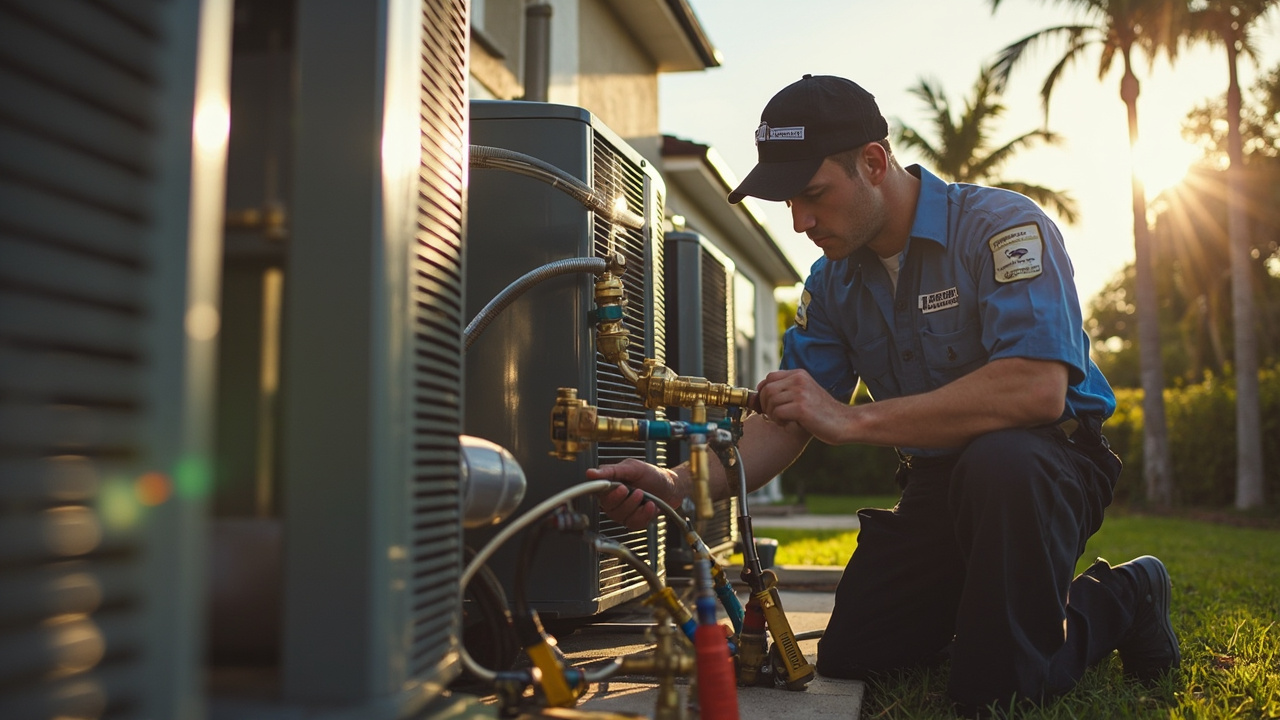
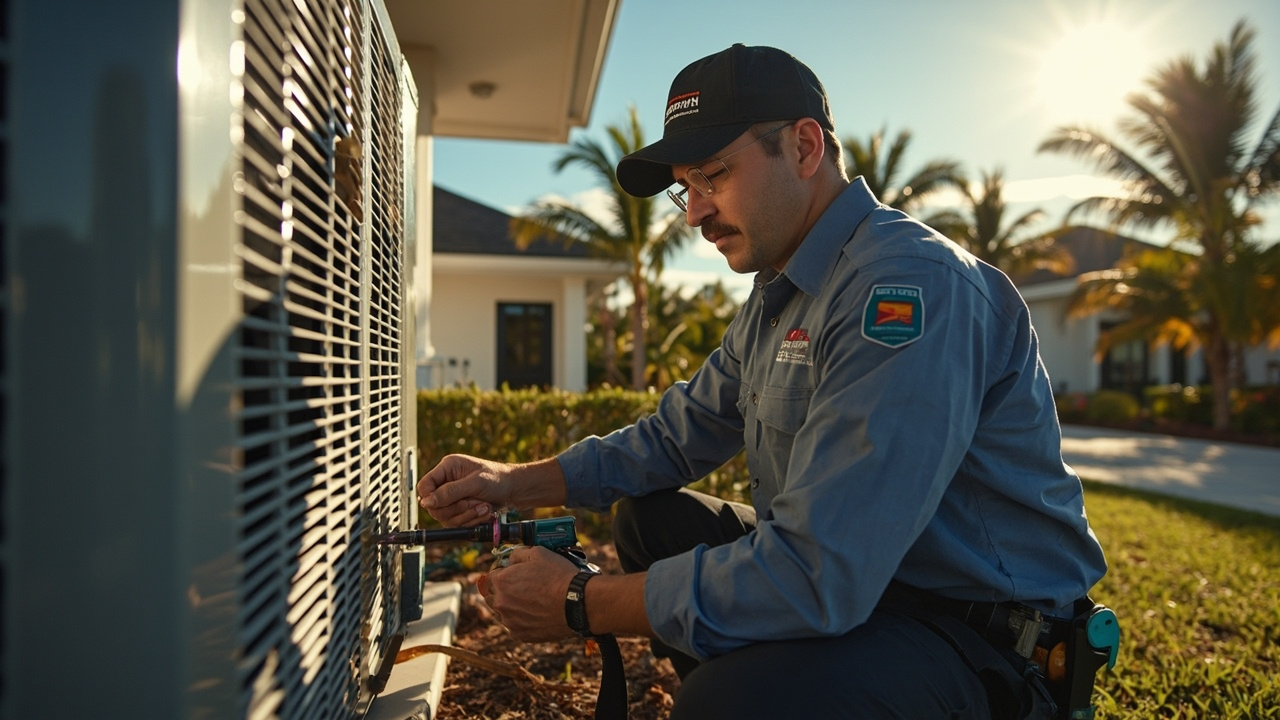
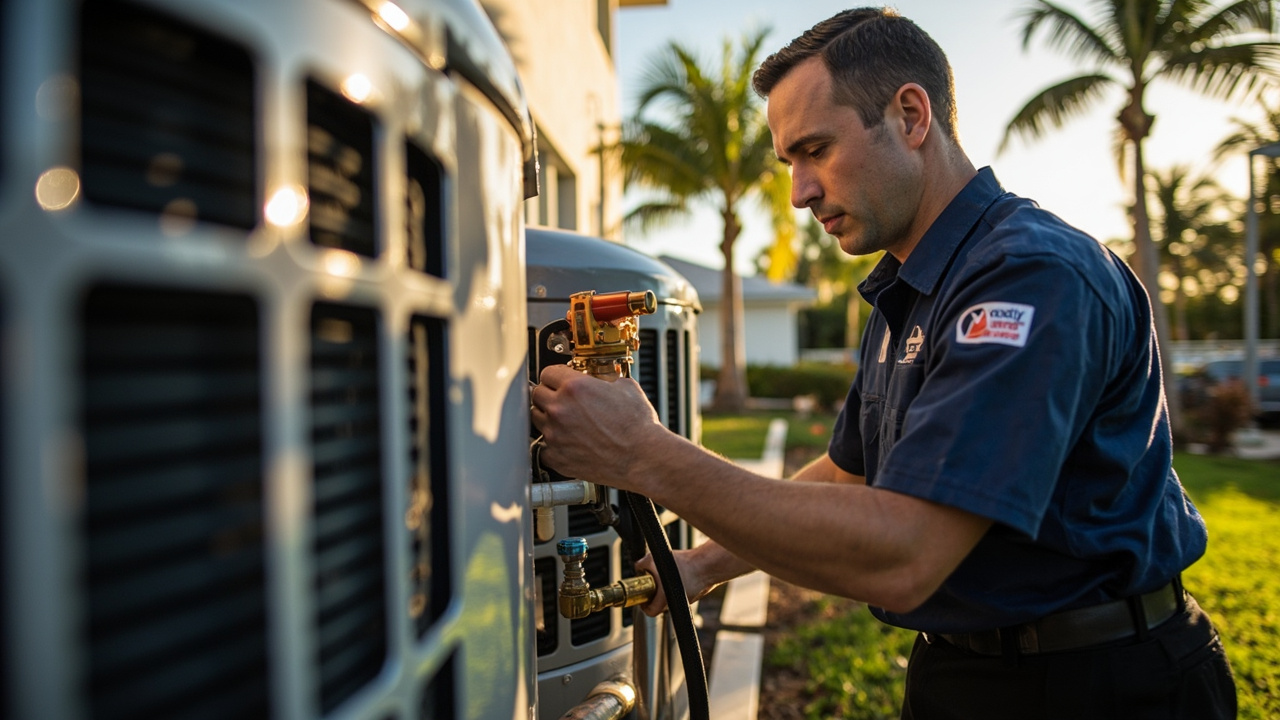
Coastal salt spray travels inland up to five miles during strong easterly winds, depositing sodium chloride on heat pump coils throughout Miami Beach, Coral Gables, and Brickell. This creates galvanic corrosion that penetrates aluminum fins within 18 months in unprotected units. Combined with year-round humidity above 70 percent, condensation forms continuously on coils even when the system is not running. Heat pump replacement becomes necessary three to five years earlier in Miami compared to inland cities. Heat pump installers must specify marine-grade coil coatings and sacrificial anode protection for equipment within the salt air zone. Emergency heat pump repair calls spike in beachfront neighborhoods because standard residential equipment cannot withstand the atmospheric chloride concentration found between South Pointe and Sunny Isles Beach.
Miami-Dade County enforces the Florida Building Code with amendments specific to hurricane wind loads and flood elevation requirements. Heat pump system installation requires proper permitting and inspections that verify equipment mounting meets 175 mph wind resistance standards in coastal velocity zones. Local contractors understand the difference between prescriptive and engineered installation methods for different exposure categories throughout the county. Horizon Heating and Cooling Miami maintains relationships with building department inspectors who recognize our work quality and code compliance. This speeds permit approvals and prevents installation delays. Choosing heat pump service from technicians who know Miami-Dade permitting procedures protects your investment and ensures your homeowner's insurance remains valid after the next named storm.