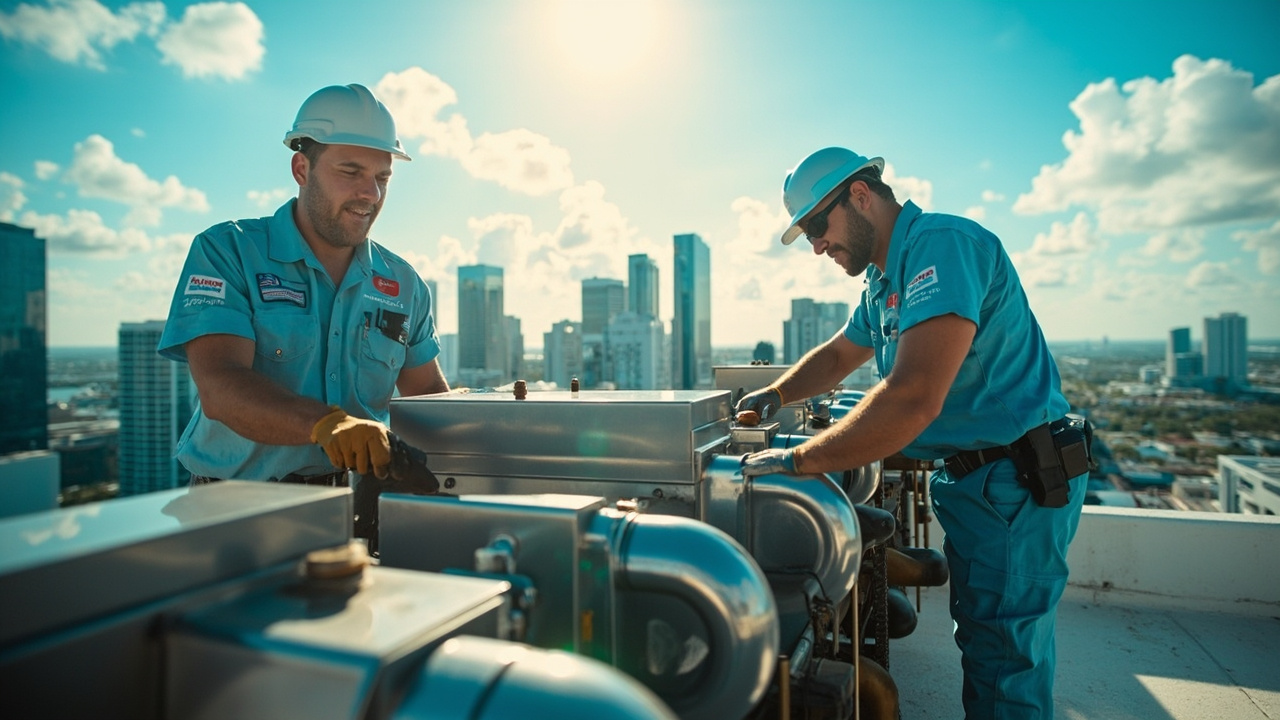
Miami sits in the most active hurricane corridor in the Atlantic basin. Commercial HVAC contractors must engineer systems to survive sustained winds exceeding 150 mph while maintaining operational integrity after storms pass. Rooftop units require tie-downs anchored to structural steel, not roof decking. Electrical components need waterproof housings because rain does not fall vertically during hurricanes. Condensate drains need backflow prevention to stop storm surge from flooding air handlers. Salt spray from coastal winds corrodes aluminum coils and copper refrigerant lines within three years without protective coatings. Commercial heating and cooling services that ignore these factors install equipment that fails prematurely, leaving your business vulnerable during peak demand periods when replacement parts are scarce and contractors are backlogged for weeks.
Miami-Dade County operates under the Florida Building Code with supplemental amendments addressing hurricane resilience and energy efficiency. Commercial mechanical contractors must hold state certification and maintain Product Control approvals for equipment installed in High Velocity Hurricane Zone areas. Industrial HVAC contractors working in Miami know that inspectors verify tie-down engineering, refrigerant leak detection systems, and ventilation rates matching occupancy permits. We have worked with local inspectors for years, understanding their interpretation of code sections and preferred installation methods. This relationship eliminates surprise violations and re-inspection delays. Our familiarity with Miami's commercial districts means we know which buildings have limited roof load capacity, which neighborhoods experience frequent power sags requiring voltage protection, and which industrial zones mandate enhanced filtration for outdoor air quality.