
Managing the humidity in your Sunset Harbour gym or yoga studio for better air quality
High humidity in Miami gyms creates more than discomfort. It accelerates equipment rust, promotes mold growth, and drives up energy costs. In Sunset Harbour’s coastal location, the combination of salt air and year-round tropical moisture creates a perfect storm for indoor air quality problems. How to Get Your Miami Lakes HVAC System Ready for the Summer Heat.
Fitness facilities face unique challenges. Each person working out adds moisture to the air through respiration and sweat. A single hot yoga class can release gallons of water vapor into the space. Without proper dehumidification, this moisture has nowhere to go and settles into every surface.
The science behind the problem starts with Miami’s climate. Average relative humidity hovers around 75-80% throughout the year. When warm, moisture-laden air contacts cooler surfaces like mirrors or air conditioning vents, condensation forms. This creates ideal conditions for mold and mildew growth on walls, ceilings, and even rubber flooring. HVAC Miami Lakes.
Commercial gym equipment suffers in high-humidity environments. Steel frames rust. Electronic displays malfunction. Rubber components break down faster. The cost of replacing damaged equipment adds up quickly. Many gym owners find themselves replacing cardio machines every few years instead of the expected 7-10 year lifespan.
Beyond equipment damage, high humidity affects member experience. Slippery floors become dangerous. Mirrors fog up. The air feels heavy and uncomfortable. These conditions drive away customers who expect a clean, professional environment for their workouts.
Understanding humidity loads in fitness facilities
Calculating the right dehumidification capacity requires understanding the specific moisture sources in your gym. The primary factors include:
- Building volume (cubic feet of space)
- Number of occupants during peak hours
- Type of activities (hot yoga produces more moisture than weight training)
- Ventilation rates from outdoor air exchange
- Moisture from showers and locker rooms
A typical 5,000 square foot gym in Sunset Harbour might need to remove 100-150 pints of moisture per day during peak hours. This translates to a commercial-grade dehumidifier with a capacity of 5,000-7,000 cubic feet per minute of airflow.
The latent heat load from moisture is often greater than the sensible heat load from temperature. This means standard air conditioning alone cannot solve humidity problems. AC units remove some moisture as a byproduct of cooling, but they’re not designed to handle the continuous moisture load from a busy gym.
Commercial dehumidification solutions for Miami gyms
Several approaches work for fitness facilities in South Florida. The right choice depends on your building layout, budget, and specific needs.
Integrated HVAC dehumidifiers connect to your existing air handling system. These units remove moisture before air circulates through the space. They work well for larger facilities with central air systems. The upfront cost is higher, but operating costs are lower because they use the existing ductwork and controls. The Best Air Purification Systems for Luxury Pinecrest Estates.
Standalone dehumidifiers offer flexibility for smaller spaces or areas with unique requirements. Hot yoga studios benefit from dedicated units that can maintain specific humidity levels. These units typically include built-in pumps to remove collected water automatically.
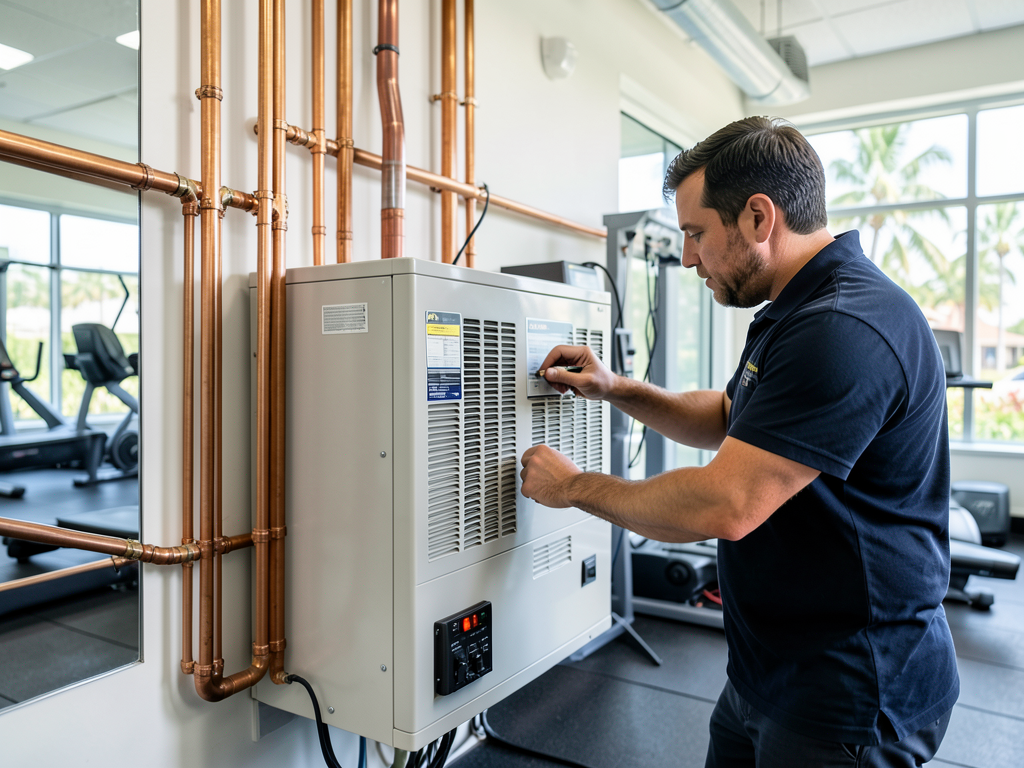
Wall-mounted dehumidifiers save floor space in crowded gyms. They mount high on walls where they’re out of the way but still effective. Many models include washable filters that trap dust and airborne particles.
High-capacity portable units work for temporary needs or facilities undergoing renovation. They can be moved to different areas as needed. Most include condensate pumps for continuous operation without manual emptying.
Installation considerations for Sunset Harbour locations
Coastal buildings in Sunset Harbour face additional challenges. Salt air accelerates corrosion on metal components. High winds during hurricane season require special mounting considerations. Many buildings sit in flood zones, affecting equipment placement.
Proper installation starts with a site assessment. Technicians evaluate the building envelope, existing HVAC systems, and moisture sources. They calculate heat and moisture loads using industry-standard software that accounts for Miami’s specific climate conditions.
Ductwork integration requires careful planning. Supply and return ducts must be sized correctly to maintain proper airflow. Poor duct design creates pressure imbalances that reduce system efficiency. In retrofit situations, existing ducts may need modification to handle the additional airflow.
Condensate drainage presents unique challenges in coastal areas. High water tables can cause backup in floor drains. Many installations use condensate pumps that lift water to ceiling height for gravity drainage. These systems include overflow switches that shut down the unit if drainage fails.
Electrical requirements vary by unit size. Larger commercial dehumidifiers need dedicated 240-volt circuits. Installation must comply with Miami-Dade County electrical codes, which include specific requirements for equipment in flood zones.
Maintenance requirements for optimal performance
Commercial dehumidifiers need regular maintenance to operate efficiently. Filter cleaning or replacement should happen monthly during heavy use periods. Dirty filters reduce airflow and increase energy consumption.
Coil cleaning prevents efficiency loss. Dust and debris buildup on evaporator coils insulates the surface and reduces moisture removal capacity. Annual professional cleaning restores peak performance.
Condensate drain lines require periodic flushing to prevent algae growth. Blocked drains cause water damage and system shutdown. Many facilities use biocide tablets in drain pans to prevent biological growth.
Refrigerant levels affect system performance. Low refrigerant reduces moisture removal capacity and increases energy consumption. Annual checks ensure proper charge and identify potential leaks early.
Control systems need calibration to maintain target humidity levels. Most gyms benefit from 50-60% relative humidity. Levels below 45% feel uncomfortable and can dry out skin and nasal passages. Levels above 65% promote mold growth.
Energy efficiency and operating costs
Commercial dehumidifiers operate continuously in Florida’s climate. Energy consumption becomes a significant operating cost. High-efficiency units use 30-40% less electricity than standard models.
Energy Star certified commercial dehumidifiers meet strict efficiency guidelines. They typically use scroll compressors and high-efficiency fan motors. The higher upfront cost often pays for itself within two years through reduced electricity bills.
Smart controls optimize operation based on actual conditions. Humidity sensors trigger dehumidification only when needed. Some systems integrate with building management systems to coordinate with HVAC operation and reduce peak demand charges.
Heat recovery options improve efficiency. Some units capture waste heat from the refrigeration cycle and use it to reheat air after dehumidification. This prevents the cool, clammy feeling that occurs when dehumidified air is too cold.
Operating costs vary by unit size and local electricity rates. A typical 5,000 square foot gym might spend $150-300 monthly on dehumidifier electricity. High-efficiency units can reduce this by $50-100 per month.
Health and safety benefits
Proper humidity control creates healthier environments for gym members and staff. Mold and mildew release spores that cause respiratory problems. Dust mites thrive in humid conditions. These allergens affect people with asthma and allergies.
Low humidity levels reduce the survival rate of airborne viruses. Influenza viruses survive longer in humid air. Maintaining 50-60% relative humidity helps limit disease transmission.
Condensation on equipment creates slip hazards. Wet floors increase liability risks for gym owners. Proper dehumidification keeps surfaces dry and safe.
Equipment longevity improves with controlled humidity. Electronic components last longer without moisture exposure. Mechanical parts experience less corrosion. The total cost of ownership decreases significantly.
Member satisfaction increases in comfortable environments. People notice when air feels fresh and clean. They’re more likely to renew memberships and recommend the facility to others.
Compliance with building codes and standards
Miami-Dade County enforces strict building codes for commercial facilities. All electrical work must meet Florida Building Code requirements. Equipment in flood zones needs elevation or special protection.
ASHRAE Standard 62.1 sets minimum ventilation rates for commercial buildings. Proper dehumidification works with ventilation systems to maintain air quality while controlling moisture. ASHRAE Standard 62.1.
Local health departments inspect fitness facilities for sanitation. Excessive humidity and mold growth create code violations. Regular maintenance and monitoring prevent compliance issues. EPA mold guidelines.
Insurance companies may require specific humidity control measures. Some policies include provisions for mold prevention. Documentation of proper humidity control can help with claims if problems occur.
Choosing the right system for your facility
Several factors influence system selection. Budget constraints affect initial choices. Available space determines equipment size and location. Existing infrastructure impacts installation complexity.
Hot yoga studios need precise humidity control. These facilities often require desiccant dehumidifiers that can maintain specific moisture levels regardless of outside conditions.
Traditional gyms benefit from integrated systems that work with existing HVAC. These provide consistent conditions throughout the space without creating hot or cold spots.
Facilities with high ceilings need units with adequate throw distance. Air distribution becomes critical in tall spaces. Some installations use multiple smaller units rather than one large unit for better coverage.
Retrofit projects face space constraints. Equipment must fit in mechanical rooms or ceiling spaces. Some facilities use vertical units to maximize limited floor space.
Future expansion plans affect sizing decisions. Oversizing now provides capacity for growth without requiring system replacement later.
Cost factors and return on investment
Initial investment varies by system type and capacity. Basic standalone units start around $2,000-3,000. Integrated systems cost $10,000-25,000 depending on facility size.
Installation costs depend on complexity. Simple plug-and-play units need minimal labor. Integrated systems require professional installation with electrical and ductwork work.
Operating costs include electricity, maintenance, and filter replacement. Annual maintenance contracts typically cost $300-600 for commercial units.
ROI calculation should include avoided costs. Preventing equipment damage saves thousands in replacement costs. Reducing member turnover preserves revenue. Avoiding code violations prevents fines and legal issues.
Most facilities see positive ROI within 2-3 years. The exact timeline depends on local electricity rates, usage patterns, and the specific problems being solved.
Common mistakes to avoid
Undersizing units creates continuous operation without achieving target conditions. Always calculate loads based on peak conditions, not average use.
Ignoring ventilation requirements leads to poor air quality. Dehumidification must work with fresh air intake to maintain healthy environments.
Improper drainage causes water damage. Floor drains in flood zones may not work during heavy rains. Always include backup drainage options.
Skipping maintenance reduces efficiency and shortens equipment life. Establish regular service schedules before problems occur.
Choosing price over quality often costs more long-term. Cheap units use more electricity and need frequent replacement. Quality equipment provides better reliability and efficiency.
Frequently Asked Questions
How much does it cost to dehumidify a 5,000 square foot gym in Sunset Harbour?
Initial equipment costs range from $3,000 for basic units to $15,000 for integrated systems. Installation adds $1,000-5,000 depending on complexity. Monthly operating costs average $150-300 for electricity.
Can I use residential dehumidifiers for my gym?
Residential units lack the capacity and durability for commercial use. They typically remove 30-70 pints per day versus 100+ pints needed for gyms. Commercial units include features like continuous drainage and heavy-duty components.
How often should commercial dehumidifiers be serviced?
Filters need monthly cleaning during heavy use. Professional maintenance should occur quarterly for optimal performance. Annual deep cleaning prevents efficiency loss.
Will dehumidification reduce my air conditioning costs?
Proper dehumidification often reduces AC runtime because the system doesn’t need to work as hard to remove moisture. However, the dehumidifier adds its own electrical load. Net savings depend on your specific conditions.
What humidity level should I maintain in my gym?
Most gyms benefit from 50-60% relative humidity. This prevents mold growth while maintaining comfort. Hot yoga studios may target 40-50% for optimal practice conditions.
How long do commercial dehumidifiers last?
Quality commercial units typically last 8-12 years with proper maintenance. Coastal environments may reduce lifespan to 5-8 years due to salt air corrosion.
Do I need permits for dehumidifier installation?
Electrical modifications require permits in Miami-Dade County. Mechanical permits may be needed for integrated systems. Professional installers handle permitting requirements.
Can dehumidification help with existing mold problems?
Dehumidification prevents new mold growth but doesn’t eliminate existing mold. Active mold requires professional remediation before dehumidification provides long-term control.
What size dehumidifier do I need for my facility?
Size depends on square footage, ceiling height, occupancy, and activities. A professional load calculation considers all factors to recommend proper capacity.
How do I know if my current system is working properly?
Humidity levels above 65% indicate inadequate dehumidification. Musty odors, condensation on surfaces, and equipment corrosion are warning signs. Professional assessment can identify specific problems.

Take control of your gym’s air quality today
High humidity in your Sunset Harbour gym or yoga studio creates real problems that affect your business, your equipment, and your members’ experience. The tropical climate of Miami makes professional dehumidification not just an option but a necessity for commercial fitness facilities.
Don’t wait for equipment failure or mold problems to force action. A proper assessment can identify your specific needs and recommend the most cost-effective solution. Modern commercial dehumidifiers provide reliable performance while reducing energy costs and maintenance headaches. Reliable 24 Hour Emergency AC Repair in South Miami.
Call Horizon Heating and Cooling at (786) 789-8277 for a free consultation. Our technicians understand the unique challenges of Miami’s climate and can design a system that keeps your facility comfortable, safe, and profitable. We serve Sunset Harbour and all of Miami-Dade County with emergency service available 24/7.
Better air quality starts with proper humidity control. Make the call today and breathe easier tomorrow.
You may also find this helpful. Protecting your Gables Estates walk-in closet from mold and leather damage.
{
“@context”: “https://schema.org”,
“@type”: “BlogPosting”,
“headline”: “Managing the humidity in your Sunset Harbour gym or yoga studio for better air quality”,
“description”: “Control humidity in your Sunset Harbour gym with professional dehumidification. Prevent mold, protect equipment, and improve air quality in Miami’s tropical climate.”,
“wordCount”: 2193,
“datePublished”: “2026-06-30T08:46:00.000Z”,
“dateModified”: “2026-06-30T08:46:00.000Z”,
“inLanguage”: “en-US”,
“mainEntityOfPage”: {
“@type”: “WebPage”,
“@id”: “https://horizonheatingandcoolingmiami.com”
},
“publisher”: {
“@type”: “LocalBusiness”,
“name”: “Horizon Heating and Cooling Miami”,
“url”: “https://horizonheatingandcoolingmiami.com”
},
“author”: {
“@type”: “Organization”,
“name”: “Horizon Heating and Cooling Miami”,
“url”: “https://horizonheatingandcoolingmiami.com”
},
“image”: {
“@type”: “ImageObject”,
“url”: “https://horizonheatingandcoolingmiami.com/wp-content/uploads/2026/03/managing-the-humidity-in-your-sunset-harbour-gym-o-1.png”
}
}
{
“@context”: “https://schema.org”,
“@type”: “HVACBusiness”,
“name”: “Horizon Heating and Cooling Miami”,
“url”: “https://horizonheatingandcoolingmiami.com”,
“address”: {
“@type”: “PostalAddress”,
“addressLocality”: “Miami”
},
“areaServed”: {
“@type”: “City”,
“name”: “Miami”
}
}
{
“@context”: “https://schema.org”,
“@type”: “FAQPage”,
“mainEntity”: [
{
“@type”: “Question”,
“name”: “How much does it cost to dehumidify a 5,000 square foot gym in Sunset Harbour?”,
“acceptedAnswer”: {
“@type”: “Answer”,
“text”: “Initial equipment costs range from $3,000 for basic units to $15,000 for integrated systems. Installation adds $1,000-5,000 depending on complexity. Monthly operating costs average $150-300 for electricity.”
}
},
{
“@type”: “Question”,
“name”: “Can I use residential dehumidifiers for my gym?”,
“acceptedAnswer”: {
“@type”: “Answer”,
“text”: “Residential units lack the capacity and durability for commercial use. They typically remove 30-70 pints per day versus 100+ pints needed for gyms. Commercial units include features like continuous drainage and heavy-duty components.”
}
},
{
“@type”: “Question”,
“name”: “How often should commercial dehumidifiers be serviced?”,
“acceptedAnswer”: {
“@type”: “Answer”,
“text”: “Filters need monthly cleaning during heavy use. Professional maintenance should occur quarterly for optimal performance. Annual deep cleaning prevents efficiency loss.”
}
},
{
“@type”: “Question”,
“name”: “Will dehumidification reduce my air conditioning costs?”,
“acceptedAnswer”: {
“@type”: “Answer”,
“text”: “Proper dehumidification often reduces AC runtime because the system doesn’t need to work as hard to remove moisture. However, the dehumidifier adds its own electrical load. Net savings depend on your specific conditions.”
}
},
{
“@type”: “Question”,
“name”: “What humidity level should I maintain in my gym?”,
“acceptedAnswer”: {
“@type”: “Answer”,
“text”: “Most gyms benefit from 50-60% relative humidity. This prevents mold growth while maintaining comfort. Hot yoga studios may target 40-50% for optimal practice conditions.”
}
},
{
“@type”: “Question”,
“name”: “How long do commercial dehumidifiers last?”,
“acceptedAnswer”: {
“@type”: “Answer”,
“text”: “Quality commercial units typically last 8-12 years with proper maintenance. Coastal environments may reduce lifespan to 5-8 years due to salt air corrosion.”
}
},
{
“@type”: “Question”,
“name”: “Do I need permits for dehumidifier installation?”,
“acceptedAnswer”: {
“@type”: “Answer”,
“text”: “Electrical modifications require permits in Miami-Dade County. Mechanical permits may be needed for integrated systems. Professional installers handle permitting requirements.”
}
},
{
“@type”: “Question”,
“name”: “Can dehumidification help with existing mold problems?”,
“acceptedAnswer”: {
“@type”: “Answer”,
“text”: “Dehumidification prevents new mold growth but doesn’t eliminate existing mold. Active mold requires professional remediation before dehumidification provides long-term control.”
}
},
{
“@type”: “Question”,
“name”: “What size dehumidifier do I need for my facility?”,
“acceptedAnswer”: {
“@type”: “Answer”,
“text”: “Size depends on square footage, ceiling height, occupancy, and activities. A professional load calculation considers all factors to recommend proper capacity.”
}
},
{
“@type”: “Question”,
“name”: “How do I know if my current system is working properly?”,
“acceptedAnswer”: {
“@type”: “Answer”,
“text”: “Humidity levels above 65% indicate inadequate dehumidification. Musty odors, condensation on surfaces, and equipment corrosion are warning signs. Professional assessment can identify specific problems.”
}
}
]
}
{
“@context”: “https://schema.org”,
“@type”: “BreadcrumbList”,
“itemListElement”: [
{
“@type”: “ListItem”,
“position”: 1,
“name”: “Home”,
“item”: “https://horizonheatingandcoolingmiami.com”
},
{
“@type”: “ListItem”,
“position”: 2,
“name”: “Blog”,
“item”: “https://horizonheatingandcoolingmiami.com/blog”
},
{
“@type”: “ListItem”,
“position”: 3,
“name”: “Managing the humidity in your Sunset Harbour gym or yoga studio for better air quality”
}
]
}
{
“@context”: “https://schema.org”,
“@type”: “Service”,
“serviceType”: “HVAC”,
“provider”: {
“@type”: “LocalBusiness”,
“name”: “Horizon Heating and Cooling Miami”,
“url”: “https://horizonheatingandcoolingmiami.com”
},
“areaServed”: {
“@type”: “City”,
“name”: “Miami”
},
“description”: “Control humidity in your Sunset Harbour gym with professional dehumidification. Prevent mold, protect equipment, and improve air quality in Miami’s tropical climate.”
}