
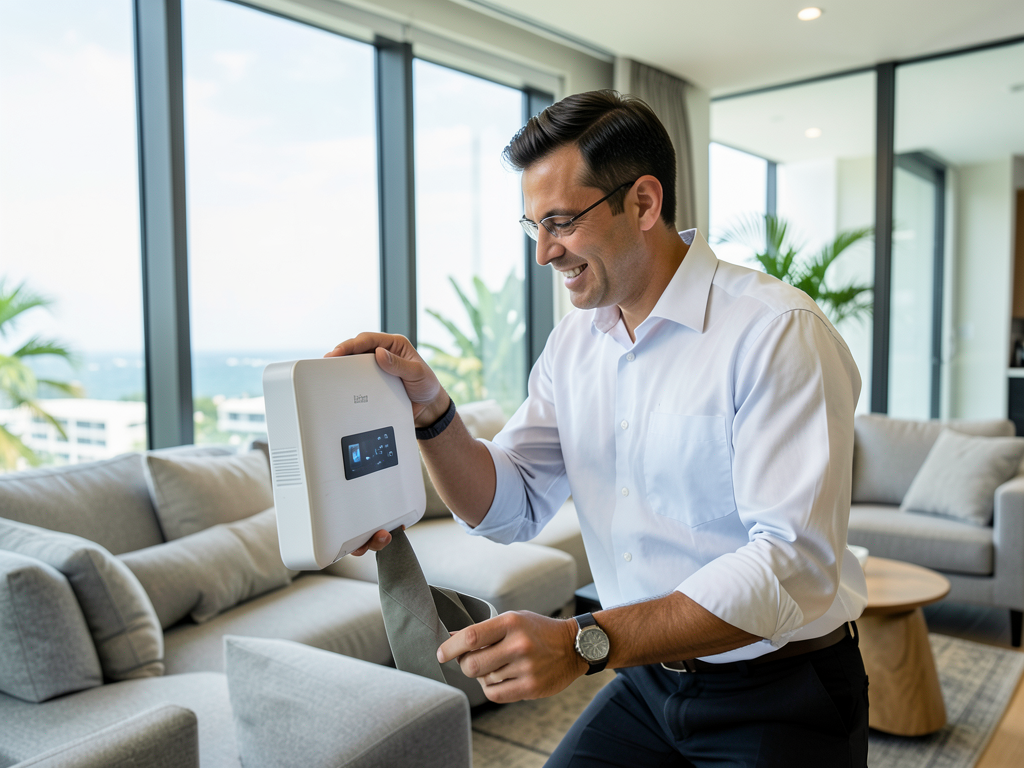
Finding the right thermostat settings for Miami summers starts with understanding our unique climate
Miami summers are relentless. With average temperatures soaring above 90°F and humidity levels consistently over 70%, setting your thermostat is not just about comfort—it’s about survival. The Department of Energy recommends 78°F when you’re home and 82°F to 85°F when away, but Miami’s extreme humidity means those numbers might not tell the whole story. Department of Energy air sealing guide.
Relative humidity plays a bigger role here than in most of the country. When indoor humidity climbs above 55%, your home becomes a breeding ground for mold and mildew. That’s why many Miami homeowners find themselves setting the thermostat lower than the national recommendations just to feel comfortable and protect their property. How to Get Your Miami Lakes HVAC System Ready for the Summer Heat.
Living in areas like Coral Gables or Pinecrest means dealing with older homes that may not have modern insulation. These houses heat up faster and hold moisture longer. In newer developments like Doral or Homestead, energy-efficient construction helps, but the constant Gulf breeze still carries salt air that can corrode outdoor units and reduce efficiency. Installing Modern AC Systems in Historic Coral Gables Homes Without Damaging the Architecture.
Your thermostat setting directly impacts your FPL bill. For every degree you raise the temperature above 72°F, you can save about 3-5% on cooling costs. That adds up quickly during Miami’s eight-month cooling season. FPL thermostat energy saving tips.
Let’s break down exactly how to set your thermostat for maximum comfort and minimum cost this summer.
The Golden Rule: Recommended Thermostat Settings for Florida Summers
The standard advice from the Department of Energy and Florida Power & Light is simple: 78°F when you’re home and awake, 82°F to 85°F when you’re away or sleeping.
But Miami’s reality is different. When you factor in our high dew points, many residents find 78°F feels more like 85°F. The ‘real feel’ temperature is what matters, not just the number on your thermostat.
For homes in coastal areas like Miami Beach or Key Biscayne, where salt air accelerates corrosion, keeping your system running efficiently at slightly higher temperatures can extend the life of your equipment. In inland neighborhoods like Kendall or The Hammocks, where afternoon heat builds faster, you might need to start cooling earlier in the day.
Smart thermostats can help bridge this gap. Models from Ecobee or Nest learn your habits and adjust automatically. They can sense humidity levels and switch to ‘dehumidify’ mode when needed, which is crucial for Miami homes.
Here’s a practical daily schedule that balances comfort and cost:
- 7:00 AM – 75°F (morning cooldown before humidity builds)
- 9:00 AM – 78°F (standard daytime setting)
- 5:00 PM – 76°F (home from work, humidity at peak)
- 10:00 PM – 74°F (nighttime comfort with ceiling fans)
- 6:00 AM – 82°F (pre-warm for waking up)
This schedule assumes you’re home during the day. If you work outside the home, bump the daytime setting to 80°F and use your smart thermostat’s ‘away’ mode to automatically adjust when you leave.
The Humidity Factor: Why Temperature Isn’t Everything in Miami
In Miami, relative humidity is the silent comfort killer. When humidity exceeds 60%, your body can’t cool itself through sweat evaporation. That’s why 78°F at 80% humidity feels miserable, while 78°F at 45% humidity feels pleasant.
The ideal indoor humidity range is 45-55%. Above that, you risk mold growth. Below that, you might experience dry skin and static electricity. Miami’s outdoor air often sits at 70-80% humidity, so your AC has to work overtime to remove moisture.
Many modern thermostats include humidity sensors. If yours doesn’t, consider adding a separate hygrometer. When indoor humidity climbs above 60%, your AC might need to run longer cycles, even if the temperature is where you want it.
Older homes in historic districts like Coral Gables often lack proper vapor barriers. This means moisture seeps in through walls and floors. In these cases, a whole-house dehumidifier might be worth the investment, especially if you’re dealing with musty odors or condensation on windows.
Coastal homes face additional challenges. Salt air carries moisture that can condense on cooler indoor surfaces. If you notice water droplets on your windows or mirrors, your indoor humidity is likely too high.
Proper AC sizing is critical in Miami. An oversized unit cools the air quickly but doesn’t run long enough to remove humidity. This leaves you with cold, clammy air. A properly sized system runs longer cycles, removing more moisture and creating more comfortable conditions.
Day vs. Night: Optimizing for Sleep and Savings
Sleeping in Miami’s summer heat is challenging. Your body temperature naturally drops at night, so you might need cooler temperatures for comfortable sleep.
The ideal sleep temperature is between 72°F and 75°F. At these temperatures, your body can maintain its natural sleep cycle without working to cool itself down.
Ceiling fans are your best friend for nighttime cooling. They create a wind-chill effect that makes you feel 3-4°F cooler. This means you can set your thermostat 2-3°F higher and still sleep comfortably.
Here’s a nighttime strategy that saves money:
- Set thermostat to 74°F at bedtime
- Turn on ceiling fans in bedrooms
- Use breathable cotton sheets
- Close bedroom doors to create smaller cooling zones
- Run bathroom exhaust fans to remove moisture
During power outages, which are common during Miami’s summer thunderstorms, battery-powered fans can make a huge difference. Keep a few on hand for emergency cooling. Reliable 24 Hour Emergency AC Repair in South Miami.
For homes with multiple occupants, consider zoning systems. These allow you to cool only the rooms that are occupied, saving energy and money. This is especially useful in larger homes in areas like Aventura or Pinecrest. The Best Air Purification Systems for Luxury Pinecrest Estates.
Window treatments matter more than you might think. Blackout curtains can reduce heat gain by up to 25%. In Miami’s intense sun, this can mean the difference between a comfortable night and a sweaty one.
Smart Thermostat Strategies for Miami Homeowners
Smart thermostats are game-changers for Miami homes. They learn your patterns, adjust for humidity, and can even factor in local weather forecasts.
The most effective strategy is using ‘geofencing.’ Your thermostat detects when your phone leaves a certain radius and automatically switches to energy-saving mode. When you’re heading home, it starts cooling so you walk into comfort.
Many Miami residents work from home at least part-time. If this describes you, your thermostat needs to balance comfort during work hours with savings when you’re away for errands or meetings.
Here’s how to set up your smart thermostat for maximum efficiency:
- Set a comfortable baseline (74°F-76°F) for when you’re home
- Enable humidity-based cooling so the system runs longer when moisture is high
- Program ‘away’ periods for typical errand times
- Use ‘vacation’ mode for extended absences (set to 80°F-82°F)
- Enable energy-saving algorithms that learn your preferences
Some smart thermostats integrate with FPL’s energy-saving programs. These programs can give you bill credits for allowing brief temperature adjustments during peak demand times. It’s a win-win: you save money, and the grid stays stable during heat waves.
For homes with multiple AC units, like those common in larger Miami estates, you can create different schedules for different zones. Keep bedrooms cool at night while letting living areas warm up slightly.
Voice control through Alexa or Google Assistant makes adjustments easy when you’re already in bed and realize it’s too warm. Just say ‘set bedroom to 72°F’ and your smart thermostat responds.
Miami HVAC Maintenance Tips to Support Your Settings
Your thermostat settings are only as good as your HVAC system’s performance. In Miami’s harsh climate, regular maintenance isn’t optional—it’s essential.
Air filters should be changed every 30-45 days during summer. Our high pollen counts and constant AC use mean filters clog faster than in other parts of the country. A dirty filter forces your system to work harder, reducing efficiency by up to 15%.
Drain lines are critical in Miami’s humidity. Your AC removes gallons of water from the air daily. If the drain line clogs, water backs up and can cause expensive damage. Flush your drain line monthly with a mixture of vinegar and water to prevent algae growth.
Outdoor units need special attention in coastal areas. Salt air causes corrosion that can reduce efficiency by 30% in just a few years. Rinse your outdoor unit with fresh water monthly to remove salt buildup. Keep vegetation at least 2 feet away for proper airflow.
Coil cleaning should happen annually, but Miami’s conditions might require it twice a year. Dirty coils reduce heat transfer efficiency, forcing your system to run longer and use more electricity.
Refrigerant levels are crucial. Low refrigerant not only reduces cooling capacity but can cause your compressor to fail. Have a professional check levels annually, especially if you notice your system running constantly but not cooling well.
Consider a maintenance contract with a local HVAC company. They’ll handle all these tasks and catch small problems before they become expensive emergencies. In Miami’s heat, losing your AC for even 24 hours can be dangerous.
For older homes in historic districts, make sure your HVAC contractor understands local building codes. Miami-Dade County has strict requirements for equipment placement and tie-downs, especially in hurricane-prone areas.
Calculation Table: Potential Savings per Degree
Understanding the relationship between temperature settings and your FPL bill helps you make informed decisions. Here’s what you can expect to save by adjusting your thermostat:
| Temperature Change | Estimated Monthly Savings | Annual Savings |
|---|---|---|
| 72°F to 74°F | $25-$35 | $300-$420 |
| 74°F to 76°F | $20-$30 | $240-$360 |
| 76°F to 78°F | $15-$25 | $180-$300 |
| 78°F to 80°F | $10-$20 | $120-$240 |
These numbers assume a typical 2,000-square-foot Miami home with a 3-ton AC unit. Your actual savings will vary based on your home’s insulation, window quality, and how well your system is maintained.
The biggest savings often come from combining temperature adjustments with other strategies. Using ceiling fans, closing blinds during peak sun hours, and maintaining your system can multiply your energy savings.
Consider this: raising your thermostat by just 2°F while using ceiling fans can make you feel just as comfortable as setting it 4°F lower without fans. That’s a potential annual savings of $200-$300 with minimal lifestyle impact.
Additional Energy-Saving Strategies for Miami Homes
Your thermostat is just one piece of the energy-saving puzzle. Here are additional strategies that work well in Miami’s climate:
Window film can block up to 80% of solar heat gain. This is especially effective for homes with large windows, common in modern Miami architecture. The film also reduces UV damage to furniture and flooring.
Attic insulation is critical in South Florida. Many older Miami homes have minimal attic insulation, allowing heat to radiate down into living spaces. Adding R-30 to R-38 insulation can reduce cooling costs by 20%.
Landscaping can provide natural cooling. Planting trees on the south and west sides of your home creates shade that can reduce indoor temperatures by 3-6°F. Choose salt-tolerant species if you’re within a few miles of the coast.
Lighting choices matter more than you might think. Incandescent bulbs create heat as well as light. Switching to LED bulbs can reduce both your lighting and cooling loads.
Appliance use timing can impact your cooling costs. Run heat-generating appliances like ovens, dryers, and dishwashers during cooler evening hours when your AC doesn’t have to work as hard.
Whole-house fans can be effective in Miami’s transitional seasons. These large ceiling-mounted fans pull cool evening air through your home and push hot air out through attic vents. They use about 10% of the electricity of an AC unit.
Dehumidifiers can be a smart addition for Miami homes. While your AC removes moisture, it’s not optimized for that purpose. A dedicated dehumidifier can keep humidity in the ideal range while allowing you to set your thermostat a few degrees higher.
When to Consider AC Replacement
Even with perfect thermostat settings, an aging AC system can cost you money. Here are signs it might be time for replacement:
- Your system is over 10 years old
- Repair costs exceed $500 annually
- Your electric bills keep rising despite consistent usage
- Some rooms are consistently warmer than others
- Your system runs constantly but never reaches the set temperature
New high-efficiency systems can cut cooling costs by 30-50%. While the upfront cost is significant, the energy savings and improved comfort often pay for themselves within 5-7 years.
Look for systems with high SEER2 ratings. The minimum in Florida is 14, but units with ratings of 18-21 are available. Higher ratings mean more efficiency and lower operating costs.
Variable-speed compressors are worth the investment in Miami. These systems adjust their output to match cooling demand, running longer at lower speeds. This provides better humidity control and more consistent temperatures.
Consider a heat pump if you need both cooling and heating. Modern heat pumps work efficiently even in Miami’s mild winters, providing year-round comfort with a single system.
For homes without existing ductwork, ductless mini-split systems offer an efficient alternative. These systems are perfect for room additions, garage conversions, or historic homes where adding ducts would be difficult or expensive. Expert Ductless Mini Split Installation for Coconut Grove Cottages.
Emergency Cooling Strategies
Even with perfect settings, Miami’s summer heat can overwhelm your system during extreme weather. Here’s how to stay cool when your AC struggles:
Close off unused rooms to reduce the cooling load. This is especially effective in larger homes where you might only be using a few rooms during the day.
Use fans strategically. Box fans in windows can pull in cooler night air or push out hot air during the day. Ceiling fans should run counterclockwise in summer to create a cooling breeze.
Take advantage of cooler morning hours. Open windows and use fans to pre-cool your home before the day’s heat builds. Close everything up by mid-morning to trap the cool air inside.
Stay hydrated. Your body’s natural cooling system works better when you’re well-hydrated. Keep water bottles in the fridge for quick access to cool drinks.
Consider temporary window AC units for problem areas. If one room always feels too warm, a small window unit can provide targeted cooling without running your whole system harder.
During power outages, which are common during Miami’s summer thunderstorms, have a plan. Battery-powered fans, cool showers, and spending time in the lowest level of your home can help you stay comfortable until power returns.
Conclusion
Finding the best thermostat settings for Miami summers is about more than just picking a number. It’s about understanding our unique climate, humidity levels, and lifestyle needs. The standard 78°F recommendation is a good starting point, but most Miami residents find they need to adjust based on their specific situation.
Remember that humidity control is just as important as temperature control. A home at 78°F with 50% humidity feels much more comfortable than one at 74°F with 65% humidity. Invest in a good thermostat that monitors both factors, and don’t be afraid to experiment with different settings to find what works for your family.
Combine smart thermostat use with proper maintenance, good insulation, and additional cooling strategies like ceiling fans and window treatments. This comprehensive approach will keep you comfortable while minimizing your FPL bill during Miami’s long, hot summers.
Most importantly, don’t wait until your system fails on the hottest day of the year. Schedule maintenance now, and if your system is aging, start planning for replacement. In Miami’s climate, a reliable AC system isn’t a luxury—it’s a necessity for health and comfort.
Ready to optimize your home’s cooling system? Call Horizon Heating and Cooling at (786) 789-8277 for a professional assessment. Our experienced technicians understand Miami’s unique cooling challenges and can help you find the perfect balance between comfort and efficiency.
Frequently Asked Questions
What’s the ideal thermostat setting for sleeping in Miami?
The ideal sleep temperature in Miami is between 72°F and 75°F. Use ceiling fans to create a wind-chill effect that makes you feel cooler, allowing you to set the thermostat a degree or two higher while maintaining comfort.
How much can I save by raising my thermostat just one degree?
Each degree you raise your thermostat above 72°F can save approximately 3-5% on your cooling costs. For a typical Miami home, that’s about $10-$15 per month per degree, or $120-$180 annually.
Should I turn my AC off when I’m on vacation?
No, turn it up to 80°F-82°F instead. Turning it off completely can lead to humidity buildup, which can cause mold growth and damage to wood floors and furniture. A programmable thermostat can automatically adjust when you’re away.
How often should I change my AC filter in Miami?
In Miami’s climate, change your AC filter every 30-45 days during summer. Our high humidity and year-round cooling season mean filters clog faster than in other parts of the country. A clean filter can improve efficiency by up to 15%.
Is it better to keep the AC running all day or turn it off when I’m not home?
It’s better to raise the temperature when you’re away rather than turning it off completely. Your AC will use less energy maintaining a higher temperature than cooling your home back down from a very high temperature. Smart thermostats can automatically adjust based on your schedule.
How do I know if my AC is the right size for my Miami home?
A properly sized AC unit should cool your home without running constantly. Signs of an oversized unit include short cycling (frequent on/off), high humidity, and cold spots. Signs of an undersized unit include constant running and inability to reach set temperature. A professional load calculation can determine the right size for your home.
Can ceiling fans really help reduce AC costs?
Yes, ceiling fans create a wind-chill effect that makes you feel 3-4°F cooler. This allows you to raise your thermostat setting by 2-3°F while maintaining the same comfort level, potentially saving $15-$25 per month on your electric bill.
{
“@context”: “https://schema.org”,
“@type”: “BlogPosting”,
“headline”: “The best thermostat settings for Miami summers and how to save money”,
“description”: “Discover the ideal AC thermostat settings for Miami’s brutal summers to stay cool while cutting your FPL bill. Expert humidity and energy-saving tips.”,
“wordCount”: 2998,
“datePublished”: “2026-04-03T07:16:00.000Z”,
“dateModified”: “2026-04-03T07:16:00.000Z”,
“inLanguage”: “en-US”,
“mainEntityOfPage”: {
“@type”: “WebPage”,
“@id”: “https://horizonheatingandcoolingmiami.com”
},
“publisher”: {
“@type”: “LocalBusiness”,
“name”: “Horizon Heating and Cooling Miami”,
“url”: “https://horizonheatingandcoolingmiami.com”
},
“author”: {
“@type”: “Organization”,
“name”: “Horizon Heating and Cooling Miami”,
“url”: “https://horizonheatingandcoolingmiami.com”
},
“image”: {
“@type”: “ImageObject”,
“url”: “https://horizonheatingandcoolingmiami.com/wp-content/uploads/2026/03/the-best-thermostat-settings-for-miami-summers-and-1.png”
}
}
{
“@context”: “https://schema.org”,
“@type”: “HVACBusiness”,
“name”: “Horizon Heating and Cooling Miami”,
“url”: “https://horizonheatingandcoolingmiami.com”,
“address”: {
“@type”: “PostalAddress”,
“addressLocality”: “Miami”
},
“areaServed”: {
“@type”: “City”,
“name”: “Miami”
}
}
{
“@context”: “https://schema.org”,
“@type”: “FAQPage”,
“mainEntity”: [
{
“@type”: “Question”,
“name”: “What’s the ideal thermostat setting for sleeping in Miami?”,
“acceptedAnswer”: {
“@type”: “Answer”,
“text”: “The ideal sleep temperature in Miami is between 72°F and 75°F. Use ceiling fans to create a wind-chill effect that makes you feel cooler, allowing you to set the thermostat a degree or two higher while maintaining comfort.”
}
},
{
“@type”: “Question”,
“name”: “How much can I save by raising my thermostat just one degree?”,
“acceptedAnswer”: {
“@type”: “Answer”,
“text”: “Each degree you raise your thermostat above 72°F can save approximately 3-5% on your cooling costs. For a typical Miami home, that’s about $10-$15 per month per degree, or $120-$180 annually.”
}
},
{
“@type”: “Question”,
“name”: “Should I turn my AC off when I’m on vacation?”,
“acceptedAnswer”: {
“@type”: “Answer”,
“text”: “No, turn it up to 80°F-82°F instead. Turning it off completely can lead to humidity buildup, which can cause mold growth and damage to wood floors and furniture. A programmable thermostat can automatically adjust when you’re away.”
}
},
{
“@type”: “Question”,
“name”: “How often should I change my AC filter in Miami?”,
“acceptedAnswer”: {
“@type”: “Answer”,
“text”: “In Miami’s climate, change your AC filter every 30-45 days during summer. Our high humidity and year-round cooling season mean filters clog faster than in other parts of the country. A clean filter can improve efficiency by up to 15%.”
}
},
{
“@type”: “Question”,
“name”: “Is it better to keep the AC running all day or turn it off when I’m not home?”,
“acceptedAnswer”: {
“@type”: “Answer”,
“text”: “It’s better to raise the temperature when you’re away rather than turning it off completely. Your AC will use less energy maintaining a higher temperature than cooling your home back down from a very high temperature. Smart thermostats can automatically adjust based on your schedule.”
}
},
{
“@type”: “Question”,
“name”: “How do I know if my AC is the right size for my Miami home?”,
“acceptedAnswer”: {
“@type”: “Answer”,
“text”: “A properly sized AC unit should cool your home without running constantly. Signs of an oversized unit include short cycling (frequent on/off), high humidity, and cold spots. Signs of an undersized unit include constant running and inability to reach set temperature. A professional load calculation can determine the right size for your home.”
}
},
{
“@type”: “Question”,
“name”: “Can ceiling fans really help reduce AC costs?”,
“acceptedAnswer”: {
“@type”: “Answer”,
“text”: “Yes, ceiling fans create a wind-chill effect that makes you feel 3-4°F cooler. This allows you to raise your thermostat setting by 2-3°F while maintaining the same comfort level, potentially saving $15-$25 per month on your electric bill.”
}
}
]
}
{
“@context”: “https://schema.org”,
“@type”: “BreadcrumbList”,
“itemListElement”: [
{
“@type”: “ListItem”,
“position”: 1,
“name”: “Home”,
“item”: “https://horizonheatingandcoolingmiami.com”
},
{
“@type”: “ListItem”,
“position”: 2,
“name”: “Blog”,
“item”: “https://horizonheatingandcoolingmiami.com/blog”
},
{
“@type”: “ListItem”,
“position”: 3,
“name”: “The best thermostat settings for Miami summers and how to save money”
}
]
}
{
“@context”: “https://schema.org”,
“@type”: “Service”,
“serviceType”: “HVAC”,
“provider”: {
“@type”: “LocalBusiness”,
“name”: “Horizon Heating and Cooling Miami”,
“url”: “https://horizonheatingandcoolingmiami.com”
},
“areaServed”: {
“@type”: “City”,
“name”: “Miami”
},
“description”: “Discover the ideal AC thermostat settings for Miami’s brutal summers to stay cool while cutting your FPL bill. Expert humidity and energy-saving tips.”
}