
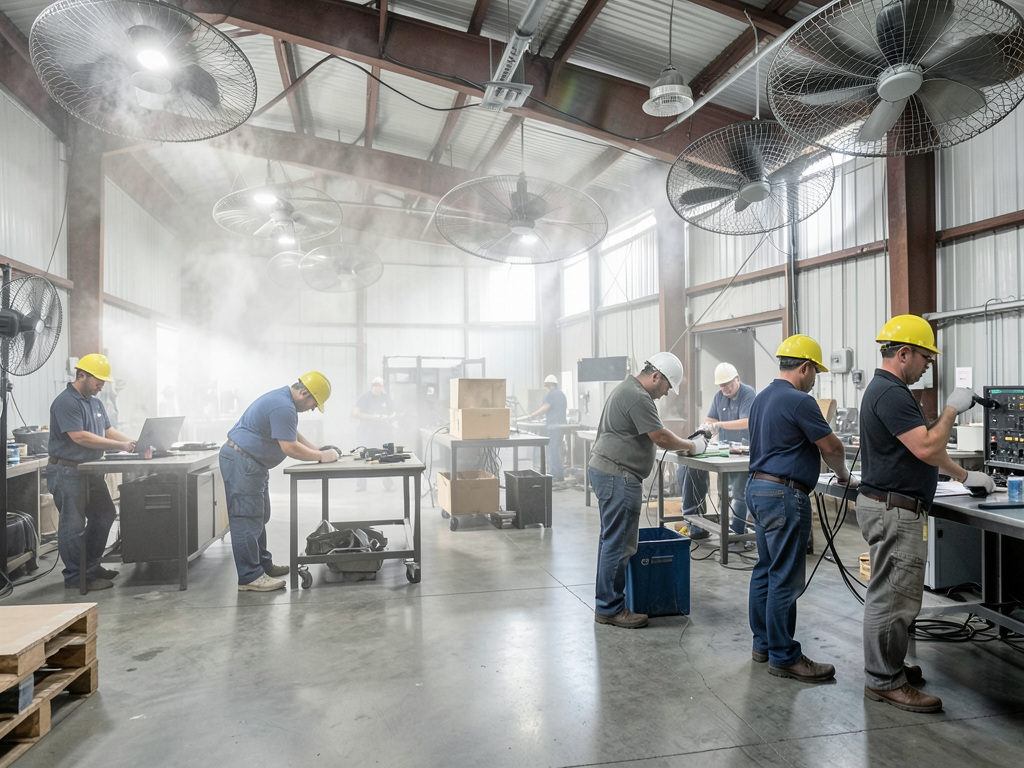
Why your Little River warehouse needs more than just a big fan to stay cool
Your Little River warehouse faces a unique challenge. Miami’s heat combined with relentless humidity creates conditions that standard warehouse fans simply cannot handle. While a large ceiling fan moves air it does not reduce temperature or control moisture. This matters because Miami warehouses often store sensitive inventory and employ workers who need safe conditions to maintain productivity. How to Get Your Miami Lakes HVAC System Ready for the Summer Heat.
Little River sits in a hot zone where summer temperatures regularly exceed 90 degrees Fahrenheit. The problem goes beyond heat. Miami’s average relative humidity stays above 70 percent year-round. This combination creates a heat index that makes 90-degree days feel like 100 degrees or more. Standard fans only circulate this hot humid air providing minimal relief.. Read more about Planning for a home addition in West Little River and what it means for your current AC.
Many warehouse operators discover this the hard way. They install large industrial fans expecting cooler conditions. Instead they find workers still sweat through their shirts and inventory shows signs of moisture damage. The solution requires understanding Miami’s specific climate challenges and selecting appropriate cooling technology.
Miami warehouses need systems that address both temperature and humidity. A fan cannot remove moisture from the air. Only mechanical cooling or dehumidification can achieve this. Without proper cooling warehouse managers risk employee heat stress OSHA violations and damaged goods. The Best Air Purification Systems for Luxury Pinecrest Estates.
Understanding Miami’s warehouse cooling challenges
Miami presents specific obstacles for warehouse cooling. The city sits in a subtropical climate zone where cooling demands exceed heating needs year-round. This means warehouse cooling systems must run constantly during business hours not just seasonally.
Little River warehouses face additional challenges. Many older buildings have minimal insulation and poor roof reflectivity. This allows solar heat gain to warm interior spaces rapidly. Combined with Miami’s intense sunlight buildings can heat up 10-15 degrees above outdoor temperatures.
Humidity creates another layer of complexity. When warm moist air contacts cooler surfaces condensation forms. In warehouses this appears on metal surfaces pipes and even inventory packaging. This moisture promotes mold growth and corrosion especially problematic for electronics or paper products.. Read more about Managing the humidity in your Sunset Harbour gym or yoga studio for better air quality.
Energy costs compound the problem. Miami warehouses often operate large bay doors for loading and unloading. Each opening allows hot humid air to enter forcing cooling systems to work harder. This creates a cycle where energy consumption rises while cooling effectiveness drops.
Understanding these factors helps explain why simple fan solutions fail. Miami’s climate demands integrated cooling approaches that combine temperature reduction with humidity control.
Comparing warehouse cooling options for Miami
Warehouse operators have several cooling options each with distinct advantages for Miami conditions. The right choice depends on warehouse size inventory type and budget constraints.
Traditional air conditioning provides reliable cooling but requires significant upfront investment. These systems work well for temperature-sensitive inventory but struggle with high humidity unless specifically designed for Miami conditions. Reliable 24 Hour Emergency AC Repair in South Miami.
High-volume low-speed fans offer an affordable starting point. They improve air circulation reducing perceived temperature by several degrees. However they cannot lower actual air temperature or remove humidity making them insufficient as standalone solutions.
Evaporative cooling systems use water evaporation to cool air. They work efficiently in dry climates but struggle in Miami’s humid environment. When outdoor humidity exceeds 60 percent evaporative coolers lose effectiveness often adding moisture rather than removing it.
Dehumidification systems specifically target moisture removal. They work well alongside other cooling methods but require significant energy consumption. In Miami warehouses where humidity drives most comfort complaints dehumidifiers often prove essential.
Spot cooling solutions target specific areas like loading docks or equipment rooms. These provide focused cooling where needed most but leave the rest of the warehouse unconditioned.
The most effective Miami warehouses often combine multiple approaches. This integrated strategy addresses both temperature and humidity while managing energy costs.
Energy efficiency considerations for Miami warehouses
Energy costs significantly impact warehouse cooling decisions in Miami. Florida Power & Light rates run higher than national averages making efficiency crucial for profitability. Florida Power & Light Business Energy Manager.
Modern cooling systems offer substantial efficiency improvements over older equipment. High-efficiency units can reduce energy consumption by 30-50 percent compared to systems from 10-15 years ago. This translates to thousands of dollars in annual savings for larger warehouses. Installing Modern AC Systems in Historic Coral Gables Homes Without Damaging the Architecture.
Variable-speed compressors adjust cooling output based on demand rather than cycling on and off. This reduces energy spikes and maintains more consistent temperatures. In Miami’s constant cooling season this technology proves particularly valuable.
Smart controls add another efficiency layer. These systems monitor conditions and adjust operation automatically. They can reduce cooling in unoccupied areas or during cooler nighttime hours. Some integrate with building management systems for comprehensive energy optimization.
Insulation improvements complement efficient cooling equipment. Adding roof insulation or reflective coatings reduces heat gain reducing cooling load. This allows smaller more efficient systems to handle the same cooling demand.
Maintenance practices also affect efficiency. Dirty coils reduce heat transfer forcing systems to work harder. Regular filter changes maintain proper airflow. These simple steps can improve efficiency by 5-15 percent.
Energy efficiency investments often pay for themselves within 2-4 years through utility savings. Miami warehouses operating year-round see faster returns than facilities in milder climates.
Miami building codes and permitting requirements
Installing warehouse cooling systems in Miami requires navigating specific building codes and permitting processes. Miami-Dade County enforces strict regulations to ensure safety and energy efficiency. Miami-Dade County Building Department.
Florida Building Code requirements apply to all new installations. These cover equipment sizing energy efficiency and installation methods. Miami-Dade often adds local amendments addressing hurricane resistance and coastal conditions.
High-velocity hurricane zone requirements affect equipment placement and mounting. Rooftop units need special tie-downs to withstand wind loads. This adds installation complexity and cost but ensures systems survive Miami’s occasional tropical storms.
Energy code compliance requires proper equipment sizing and efficiency ratings. Oversized systems waste energy and create humidity control problems. Professional load calculations ensure systems meet both cooling needs and code requirements.
Permitting timelines vary by project scope. Simple replacements might process in days while new installations require weeks. Working with experienced contractors familiar with Miami-Dade procedures helps avoid delays.
Inspections verify code compliance before systems can operate. Missing inspections can result in fines or forced system shutdowns. Professional installers typically handle permit acquisition and inspection scheduling.
Understanding these requirements helps warehouse operators budget both time and money for cooling system projects. Attempting to bypass codes often creates larger problems than it solves.
Maintenance needs for Miami warehouse cooling systems
Miami’s climate creates specific maintenance demands for warehouse cooling systems. Salt air humidity and constant operation accelerate wear requiring more frequent service than inland locations.
Coastal warehouses near Little River face salt corrosion risks. Salt particles in the air accumulate on outdoor equipment causing metal deterioration. This requires more frequent coil cleaning and protective coating applications. Without protection corrosion can reduce system lifespan by 30-50 percent.
High humidity promotes mold and algae growth on cooling coils and drain pans. These organisms reduce heat transfer efficiency and can cause unpleasant odors. Quarterly cleaning prevents buildup and maintains system performance.
Drain line maintenance proves critical in Miami’s humid conditions. Constant moisture flow can cause algae blockages. These blockages lead to water overflow damaging equipment and creating slip hazards. Annual drain line cleaning prevents these issues.
Filter changes require more frequent attention in Miami warehouses. Dust pollen and salt particles clog filters faster than in drier climates. Monthly filter inspection and replacement maintains proper airflow and indoor air quality.. Read more about Can high quality ceiling fans actually help your University Park AC work better?.
Refrigerant levels need monitoring as Miami’s heat causes systems to work harder. Low refrigerant reduces cooling capacity and efficiency. Annual checks ensure systems operate at designed performance levels.
Electrical connections face corrosion risks from salt air and humidity. Annual inspections catch loose connections before they cause system failures. This preventive maintenance reduces emergency repair needs.
Professional maintenance agreements provide scheduled service ensuring these tasks occur regularly. This approach prevents costly breakdowns and extends equipment life in Miami’s demanding climate.
Cost considerations for warehouse cooling upgrades
Warehouse cooling investments require careful financial planning. Costs vary widely based on system type warehouse size and installation complexity.
Basic high-volume fan installations represent the lowest cost option. These systems often cost $5,000-$15,000 for typical warehouse spaces. However they provide minimal temperature reduction making them poor choices for temperature-sensitive operations.
Traditional air conditioning systems require larger investments. A 10,000-square-foot warehouse might need $30,000-$60,000 for a complete system. This includes equipment ductwork and installation. Energy-efficient models add 15-25 percent to upfront costs but reduce operating expenses.
Dehumidification systems typically cost $10,000-$25,000 depending on capacity. These work best as supplements to cooling systems rather than standalone solutions in Miami.
Energy efficiency incentives can offset some costs. Florida Power & Light offers rebates for high-efficiency equipment. These programs can return 10-20 percent of system costs reducing effective investment.
Operating costs vary by system type and efficiency. High-efficiency systems might cost $2,000-$4,000 monthly to operate while older inefficient units could exceed $6,000 monthly for similar cooling.
Financing options help manage large investments. Many vendors offer equipment financing spreading costs over 3-7 years. This allows immediate upgrades while matching payments to energy savings.
ROI calculations should consider both direct costs and indirect benefits. Improved worker productivity reduced inventory damage and enhanced customer satisfaction all contribute to financial returns beyond energy savings.
Choosing the right cooling partner for your Little River warehouse
Selecting a cooling contractor requires evaluating specific qualifications beyond basic licensing. Miami’s unique conditions demand specialized expertise. Expert Ductless Mini Split Installation for Coconut Grove Cottages.
Experience with Miami warehouses proves essential. Contractors familiar with local climate challenges understand humidity control needs and salt corrosion prevention. They know which equipment brands perform reliably in South Florida conditions.
Proper licensing matters in Miami-Dade County. Contractors need state certification plus local business licenses. Insurance coverage including liability and workers’ compensation protects warehouse operators from potential issues.
Technical expertise shows through detailed proposals. Quality contractors provide load calculations equipment specifications and efficiency projections. They explain how proposed systems address both temperature and humidity concerns.
References from similar warehouses carry significant weight. Speaking with other warehouse operators about contractor performance reveals reliability and service quality. Ask about project timelines problem resolution and ongoing support.
Warranty offerings indicate contractor confidence. Standard equipment warranties cover 5-10 years while installation workmanship often carries 1-2 year coverage. Extended warranties might prove valuable for expensive systems.
Service availability affects long-term satisfaction. Miami warehouses need quick response for breakdowns especially during summer months. Contractors offering 24/7 emergency service provide valuable protection against extended downtime.
Communication quality during the sales process often predicts project success. Contractors who explain options clearly answer questions thoroughly and provide written proposals demonstrate professionalism worth paying for.
Investing time in contractor selection prevents costly mistakes and ensures cooling systems meet warehouse needs for years to come.
Frequently Asked Questions
Why do warehouse fans alone not cool my space effectively?
Warehouse fans move air but do not reduce temperature or remove humidity. In Miami’s hot humid climate this means they only circulate warm moist air providing minimal comfort improvement. True cooling requires systems that actually remove heat and moisture from the air.
How much does warehouse cooling cost to install in Miami?
Installation costs range from $5,000 for basic fans to $60,000+ for complete air conditioning systems in typical warehouses. Factors affecting cost include warehouse size equipment efficiency and installation complexity. Energy-efficient systems cost more upfront but reduce monthly operating expenses.
What maintenance do Miami warehouse cooling systems need?
Miami systems need quarterly coil cleaning annual refrigerant checks and monthly filter inspections due to salt air and high humidity. Coastal warehouses require additional corrosion protection. Professional maintenance agreements ensure these tasks occur regularly preventing costly breakdowns.
Are there energy rebates available for warehouse cooling upgrades?
Yes Florida Power & Light offers rebates for high-efficiency cooling equipment. These rebates typically cover 10-20 percent of system costs. Local utility providers and federal tax incentives may also apply to energy-efficient upgrades reducing effective investment costs.
How do I know what size cooling system my warehouse needs?
Proper sizing requires professional load calculations considering warehouse dimensions insulation levels heat-generating equipment and Miami’s climate factors. Oversized systems waste energy while undersized units cannot maintain comfortable conditions. Quality contractors provide these calculations before recommending specific equipment.
You may also find this helpful. How to cool your Allapattah garage conversion on a budget.
{
“@context”: “https://schema.org”,
“@type”: “BlogPosting”,
“headline”: “Why your Little River warehouse needs more than just a big fan to stay cool”,
“description”: “Little River warehouses need specialized cooling beyond big fans. Learn how Miami’s heat and humidity impact industrial spaces and what solutions actually work.”,
“wordCount”: 2066,
“datePublished”: “2026-06-12T13:36:00.000Z”,
“dateModified”: “2026-06-12T13:36:00.000Z”,
“inLanguage”: “en-US”,
“mainEntityOfPage”: {
“@type”: “WebPage”,
“@id”: “https://horizonheatingandcoolingmiami.com”
},
“publisher”: {
“@type”: “LocalBusiness”,
“name”: “Horizon Heating and Cooling Miami”,
“url”: “https://horizonheatingandcoolingmiami.com”
},
“author”: {
“@type”: “Organization”,
“name”: “Horizon Heating and Cooling Miami”,
“url”: “https://horizonheatingandcoolingmiami.com”
},
“image”: {
“@type”: “ImageObject”,
“url”: “https://horizonheatingandcoolingmiami.com/wp-content/uploads/2026/03/why-your-little-river-warehouse-needs-more-than-ju-1.png”
}
}
{
“@context”: “https://schema.org”,
“@type”: “HVACBusiness”,
“name”: “Horizon Heating and Cooling Miami”,
“url”: “https://horizonheatingandcoolingmiami.com”,
“address”: {
“@type”: “PostalAddress”,
“addressLocality”: “Miami”
},
“areaServed”: {
“@type”: “City”,
“name”: “Miami”
}
}
{
“@context”: “https://schema.org”,
“@type”: “FAQPage”,
“mainEntity”: [
{
“@type”: “Question”,
“name”: “Why do warehouse fans alone not cool my space effectively?”,
“acceptedAnswer”: {
“@type”: “Answer”,
“text”: “Warehouse fans move air but do not reduce temperature or remove humidity. In Miami’s hot humid climate this means they only circulate warm moist air providing minimal comfort improvement. True cooling requires systems that actually remove heat and moisture from the air.”
}
},
{
“@type”: “Question”,
“name”: “How much does warehouse cooling cost to install in Miami?”,
“acceptedAnswer”: {
“@type”: “Answer”,
“text”: “Installation costs range from $5,000 for basic fans to $60,000+ for complete air conditioning systems in typical warehouses. Factors affecting cost include warehouse size equipment efficiency and installation complexity. Energy-efficient systems cost more upfront but reduce monthly operating expenses.”
}
},
{
“@type”: “Question”,
“name”: “What maintenance do Miami warehouse cooling systems need?”,
“acceptedAnswer”: {
“@type”: “Answer”,
“text”: “Miami systems need quarterly coil cleaning annual refrigerant checks and monthly filter inspections due to salt air and high humidity. Coastal warehouses require additional corrosion protection. Professional maintenance agreements ensure these tasks occur regularly preventing costly breakdowns.”
}
},
{
“@type”: “Question”,
“name”: “Are there energy rebates available for warehouse cooling upgrades?”,
“acceptedAnswer”: {
“@type”: “Answer”,
“text”: “Yes Florida Power & Light offers rebates for high-efficiency cooling equipment. These rebates typically cover 10-20 percent of system costs. Local utility providers and federal tax incentives may also apply to energy-efficient upgrades reducing effective investment costs.”
}
},
{
“@type”: “Question”,
“name”: “How do I know what size cooling system my warehouse needs?”,
“acceptedAnswer”: {
“@type”: “Answer”,
“text”: “Proper sizing requires professional load calculations considering warehouse dimensions insulation levels heat-generating equipment and Miami’s climate factors. Oversized systems waste energy while undersized units cannot maintain comfortable conditions. Quality contractors provide these calculations before recommending specific equipment.”
}
}
]
}
{
“@context”: “https://schema.org”,
“@type”: “BreadcrumbList”,
“itemListElement”: [
{
“@type”: “ListItem”,
“position”: 1,
“name”: “Home”,
“item”: “https://horizonheatingandcoolingmiami.com”
},
{
“@type”: “ListItem”,
“position”: 2,
“name”: “Blog”,
“item”: “https://horizonheatingandcoolingmiami.com/blog”
},
{
“@type”: “ListItem”,
“position”: 3,
“name”: “Why your Little River warehouse needs more than just a big fan to stay cool”
}
]
}
{
“@context”: “https://schema.org”,
“@type”: “Service”,
“serviceType”: “HVAC”,
“provider”: {
“@type”: “LocalBusiness”,
“name”: “Horizon Heating and Cooling Miami”,
“url”: “https://horizonheatingandcoolingmiami.com”
},
“areaServed”: {
“@type”: “City”,
“name”: “Miami”
},
“description”: “Little River warehouses need specialized cooling beyond big fans. Learn how Miami’s heat and humidity impact industrial spaces and what solutions actually work.”
}