
Carrier vs Trane – Finding the best AC brand for Golden Beach homes
Golden Beach homeowners face a unique challenge when selecting an air conditioning system. The salty ocean air that makes coastal living so appealing also accelerates corrosion on HVAC equipment. This means your choice between Carrier and Trane isn’t just about brand preference—it’s about which system can withstand the harsh South Florida coastal environment for the longest time.. Read more about Why a hybrid dual-fuel system might be overkill for homeowners in Brownsville.
The salt air in Golden Beach contains chloride ions that attack metal components at the molecular level. This creates a specific set of requirements that standard AC units from inland areas simply cannot meet. Understanding these coastal stressors helps you make an informed decision that saves money over the long term.
Why Golden Beach’s coastal environment demands special AC systems
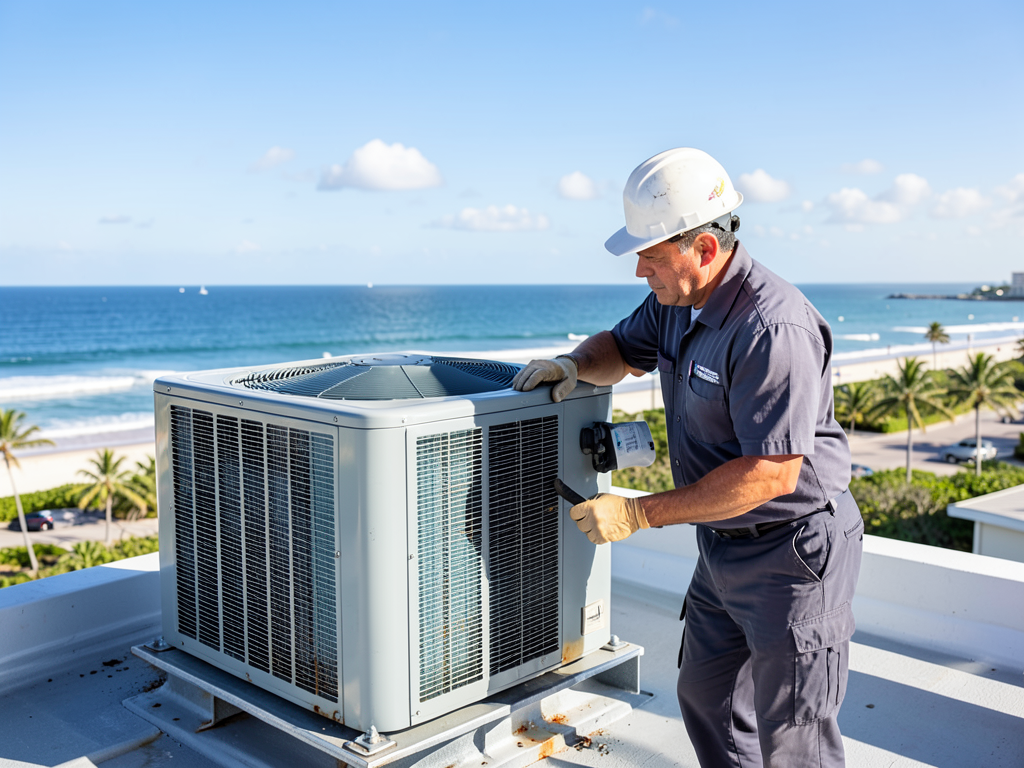
The ocean air in Golden Beach carries microscopic salt particles that travel several miles inland. These particles settle on your AC unit’s condenser coils, aluminum fins, and steel cabinets. When combined with the 90%+ humidity common to South Florida, this creates an ideal environment for electrolytic corrosion.
Standard AC units typically show signs of significant corrosion within 5-7 years in coastal areas. The aluminum fins on evaporator and condenser coils become brittle and flake away. Steel cabinets develop rust spots that expand over time. Electrical connections corrode, leading to system failures.
Golden Beach also sits in Miami-Dade County’s High Velocity Hurricane Zone (HVHZ). This means your AC unit must meet specific wind-load requirements and tie-down specifications. The building code requires units to withstand sustained winds of 170+ mph and resist uplift forces during hurricanes. Miami-Dade County building requirements.
Carrier’s coastal defense technologies
Carrier addresses coastal challenges through multiple protective technologies. Their WeatherArmor™ system provides a multi-layer defense against salt air and UV exposure. The process starts with a galvanized steel cabinet that resists rust formation at the core.
Over the galvanized steel, Carrier applies a polyester powder coating that creates a barrier against moisture and salt. This coating undergoes salt spray testing for 6000+ hours according to ASTM B117 standards. For coastal installations, Carrier offers an optional Silvershield™ coating that extends this protection to 8000+ hours.
The Infinity series from Carrier includes coastal-grade models with enhanced corrosion protection. These units feature stainless steel fasteners throughout and upgraded drain pans made from composite materials that resist UV degradation and chemical breakdown from cleaning agents.
Carrier’s Coastal models also incorporate a unique coil protection system. The condenser coils receive an additional electrostatically applied epoxy coating that bonds at the molecular level. This prevents the coil fins from deteriorating even when exposed to constant salt spray from the ocean breeze.
Trane’s coastal engineering approach
Trane takes a different approach to coastal durability with their Spine Fin™ coil technology. Instead of traditional copper tube aluminum fin coils, Trane uses all-aluminum coils that eliminate the dissimilar metal junctions where galvanic corrosion typically begins.
The Spine Fin coil design features thousands of tiny spines that extend from the aluminum tubing. This increases surface area for heat transfer while using a single metal type throughout. Without copper-aluminum junctions, the corrosion process slows significantly in salt-air environments.. Read more about The best ways to hide a bulky outdoor AC unit without ruining your Miami Springs curb appeal.
Trane’s coastal units receive a similar multi-layer protection system. The cabinets use galvanized steel with a polyester powder coat finish. However, Trane emphasizes their coil design as the primary defense against coastal degradation rather than relying solely on external coatings.
The XV series from Trane includes coastal-specific models with enhanced corrosion resistance. These units feature stainless steel service valves, corrosion-resistant drain pans, and upgraded fan blades made from composite materials that resist salt-induced embrittlement.
Trane also offers a coastal upgrade package that includes additional protective coatings on all external metal surfaces. This package extends the standard warranty coverage for coastal installations from 10 years to 12 years when properly maintained.
Head-to-head comparison: Coastal performance metrics
Understanding the technical differences between Carrier and Trane helps you make an informed decision. Here’s how their coastal-grade systems compare on key performance metrics: The Best Air Purification Systems for Luxury Pinecrest Estates.
| Feature | Carrier Coastal Grade | Trane Coastal Grade |
|---|---|---|
| Coil Material | Aluminum fins on copper tubes | All-aluminum Spine Fin |
| Salt Spray Test Hours | 6000-8000 | 5000-7000 |
| Cabinet Protection | WeatherArmor™ + Silvershield™ | Coastal Upgrade Package |
| SEER2 Rating | 18-26 | 17-24 |
| Decibel Level | 51-72 dB | 53-70 dB |
| Coastal Warranty | 10 years standard | 12 years with upgrade |
The salt spray test results show Carrier’s edge in laboratory corrosion resistance. However, Trane’s all-aluminum design eliminates the primary failure point in coastal environments—the copper-aluminum junction where galvanic corrosion accelerates.
Both brands offer variable-speed compressors that adjust cooling output based on demand. This provides better humidity control in Golden Beach’s consistently moist air. Carrier’s Greenspeed technology can modulate between 40-100% capacity, while Trane’s TruComfort system offers similar variable operation.
Miami-Dade NOA compliance and hurricane requirements
Golden Beach falls within Miami-Dade County’s High Velocity Hurricane Zone, which has the strictest building requirements in the nation. Both Carrier and Trane offer units that meet these standards, but the compliance process differs slightly. How to Get Your Miami Lakes HVAC System Ready for the Summer Heat.
Miami-Dade NOA (Notice of Acceptance) certification requires extensive testing for wind resistance, missile impact, and uplift prevention. The units must pass large and small missile tests where projectiles are fired at the equipment to simulate debris impact during hurricanes. HVAC Miami Lakes.
Carrier’s coastal units carry Miami-Dade NOA approvals with specific tie-down requirements. The approval documents specify exact anchor bolt patterns and concrete pad specifications for Golden Beach installations. Carrier provides detailed installation manuals that ensure compliance with local building officials.
Trane’s coastal models also carry Miami-Dade NOA certifications. Their approval process includes additional testing for salt spray resistance as part of the coastal certification. Trane provides zone-specific installation guidelines that account for Golden Beach’s particular wind exposure patterns.
Both brands require licensed contractors familiar with HVHZ requirements. The installation process includes specific torque specifications for all fasteners, proper concrete pad thickness, and hurricane strapping that meets Miami-Dade standards.
The tie-down requirements in Golden Beach are particularly stringent due to the community’s direct ocean exposure. Units must be anchored to reinforced concrete pads with specific bolt patterns that prevent uplift even in Category 5 hurricane conditions.
Maintenance requirements for coastal AC systems
Coastal AC systems require more frequent maintenance than inland units. The salt air creates a constant assault on all metal components, making regular cleaning essential for system longevity.
In Golden Beach, AC units should receive professional maintenance every 6 months instead of the standard annual service. This includes coil cleaning with specialized salt-removing solutions, inspection of all electrical connections, and checking for early signs of corrosion.
The condenser coils accumulate salt deposits that reduce heat transfer efficiency. When dirty, your system works harder, increasing energy costs and shortening component life. Professional coil cleaning removes these deposits before they cause permanent damage.
Coastal units also require more frequent filter changes. The high humidity in Golden Beach promotes mold and algae growth in the drain pan and evaporator coil area. Clean filters prevent these contaminants from circulating through your home and reduce strain on the blower motor.
Both Carrier and Trane offer coastal maintenance agreements that include bi-annual service visits. These agreements often include priority service during hurricane season and discounts on replacement parts if corrosion damage occurs.
The coastal environment also affects the electrical components. Salt air can cause corrosion on contactors, capacitors, and control boards. During maintenance visits, technicians should test all electrical connections and apply anti-corrosion compounds to prevent connection failures.
Energy efficiency in Golden Beach’s climate
Golden Beach’s year-round cooling demands make energy efficiency a crucial factor. Both Carrier and Trane offer high-efficiency models that can significantly reduce electricity costs in South Florida’s hot, humid climate.
Carrier’s Infinity series with Greenspeed intelligence offers SEER2 ratings up to 26. These units use variable-speed compressors that adjust output in small increments, maintaining precise temperatures while using minimal electricity. The system can operate at as low as 40% capacity when full cooling isn’t needed.
Trane’s XV20i model provides SEER2 ratings up to 24. While slightly lower than Carrier’s top models, Trane’s TruComfort technology offers similar variable-speed operation with excellent humidity control. The system modulates between 25-100% capacity for optimal efficiency.
In Golden Beach’s climate, the dehumidification capabilities often matter more than raw cooling power. Both brands offer models with enhanced moisture removal features. Carrier’s Comfort-R™ mode slows the blower during startup to remove more humidity. Trane’s ComfortLink™ II technology provides similar moisture control.
The energy savings from high-efficiency units can offset their higher initial cost within 3-5 years in South Florida. With FPL’s tiered rate structure, reducing peak demand during afternoon hours provides additional savings beyond the base efficiency rating. FPL energy rebate programs.
Both brands qualify for FPL’s energy rebate programs, which can provide $100-$300 in instant rebates for qualifying high-efficiency installations. These rebates make the premium coastal models more affordable for Golden Beach homeowners.
Parts availability and local service expertise
When your AC system needs repairs, parts availability becomes critical. Both Carrier and Trane have strong distribution networks in South Florida, but there are differences in local support.
Carrier benefits from a larger network of authorized dealers in Miami-Dade County. This means faster parts delivery and more technicians familiar with their systems. Most Carrier parts are available within 24 hours from local distribution centers in Miami or Fort Lauderdale.
Trane maintains strong support through their distributor network as well. Their parts typically arrive within 48 hours for coastal-specific components. Trane’s training programs ensure technicians understand the unique requirements of coastal installations.
In Golden Beach specifically, both brands have active service networks. However, the community’s exclusive nature means some contractors have limited access. Working with established Miami-Dade contractors who regularly serve coastal communities ensures proper handling of your system.
The complexity of coastal AC systems requires specialized knowledge. Technicians must understand corrosion patterns, proper cleaning techniques for salt-damaged components, and the specific maintenance schedules that coastal units require.
Both brands offer 24/7 emergency service through their dealer networks. In Golden Beach’s hurricane-prone environment, having access to emergency repair services during storm season proves invaluable when systems fail during heat waves. Reliable 24 Hour Emergency AC Repair in South Miami.
Cost considerations for coastal installations
Coastal AC systems cost more than standard units due to the additional protective features and materials. Understanding these cost factors helps you budget appropriately for your Golden Beach home.
Coastal-grade units from both brands typically cost 15-25% more than standard models. This premium covers the enhanced corrosion protection, upgraded components, and additional testing required for coastal certification.
Installation costs in Golden Beach may also run higher due to the community’s specific requirements. The exclusive nature of the area means contractors must coordinate with community management and adhere to strict installation guidelines.
Long-term costs favor the coastal-grade units despite the higher initial investment. Standard units in coastal areas typically fail within 7-10 years, while properly maintained coastal-grade systems can last 12-15 years or longer.
The energy savings from high-efficiency coastal models provide ongoing cost benefits. With South Florida’s high electricity rates, the efficiency premium often pays for itself through reduced utility bills within the system’s first 5 years.
Both brands offer financing options through their dealer networks. These programs can make the premium coastal systems more accessible by spreading payments over several years while you realize energy savings.
Consider the total cost of ownership rather than just the initial price. A system that costs $2,000 more upfront but lasts 5 years longer and uses 30% less electricity provides better long-term value.
Making your final decision
Choosing between Carrier and Trane for your Golden Beach home comes down to several key factors. Both brands offer excellent coastal-grade systems that can withstand the harsh South Florida environment.
If laboratory-tested corrosion resistance is your top priority, Carrier’s WeatherArmor™ system with optional Silvershield™ coating provides the highest salt spray test ratings. Their coastal units undergo the most rigorous corrosion testing in the industry.
If you prefer engineering that eliminates corrosion at the source, Trane’s all-aluminum Spine Fin coils offer a fundamentally different approach. By removing the copper-aluminum junctions where galvanic corrosion begins, Trane addresses the problem at its root.
Consider your specific Golden Beach location within the community. Homes closer to the ocean may benefit more from Carrier’s additional protective coatings. Properties with more tree cover might find Trane’s coil design sufficient for their needs.
Both brands offer excellent warranties when installed by authorized dealers. Carrier provides 10-year coastal warranties as standard. Trane offers 12-year coverage with their coastal upgrade package. These warranties reflect each company’s confidence in their coastal engineering.
The best choice ultimately depends on your priorities: maximum laboratory-tested corrosion resistance from Carrier, or fundamental corrosion elimination through Trane’s all-aluminum design. Both will serve Golden Beach homeowners well when properly selected and maintained.
Frequently Asked Questions
How long do coastal AC units typically last in Golden Beach?
Properly maintained coastal-grade AC units last 12-15 years in Golden Beach’s environment. Standard units without coastal protection typically fail within 7-10 years due to salt-air corrosion. Regular maintenance every 6 months is essential for maximizing system life in coastal areas.
Which brand offers better hurricane protection for Golden Beach homes?
Both Carrier and Trane offer units that meet Miami-Dade NOA requirements for hurricane zones. The difference lies in their approach: Carrier emphasizes protective coatings and tie-down systems, while Trane focuses on structural integrity and all-aluminum components. Both provide adequate hurricane protection when properly installed.
Are coastal AC units worth the extra cost in Golden Beach?
Yes. While coastal units cost 15-25% more upfront, they typically last 5-8 years longer than standard units in Golden Beach’s salt-air environment. When you factor in energy savings from high-efficiency models and reduced repair costs, the total cost of ownership favors coastal-grade systems.
How often should I service my coastal AC system?
Coastal AC systems in Golden Beach require professional maintenance every 6 months instead of the standard annual service. This includes coil cleaning with salt-removing solutions, electrical connection inspection, and checking for early corrosion signs. More frequent service prevents costly repairs and extends system life.
Can I install a standard AC unit in Golden Beach to save money?
While possible, installing a standard unit in Golden Beach is not recommended. The salt air will cause premature corrosion, typically leading to system failure within 7-10 years. You’ll likely spend more on repairs and early replacement than if you had invested in a coastal-grade system initially. Installing Modern AC Systems in Historic Coral Gables Homes Without Damaging the Architecture.
What SEER rating do I need for Golden Beach’s climate?
For Golden Beach’s year-round cooling demands, a minimum SEER2 rating of 18 is recommended. Higher ratings (20+) provide better humidity control and energy savings. Both Carrier and Trane offer models in this range with coastal protection features suitable for the area’s climate.
Do coastal AC units qualify for FPL rebates?
Yes. Both Carrier and Trane coastal-grade units qualify for FPL’s energy rebate programs when they meet the minimum efficiency requirements. These rebates typically range from $100-$300 and can help offset the premium cost of coastal protection features.
Which brand has better local service in Golden Beach?
Both brands have strong service networks in Miami-Dade County. Carrier has slightly more authorized dealers in the area, potentially offering faster parts availability. However, Trane’s training programs ensure technicians understand coastal installation requirements. Choose a contractor with specific experience in Golden Beach installations regardless of brand.
How do I know if my current AC unit is failing from salt corrosion?
Signs of salt corrosion include rust spots on the cabinet, flaking or discolored coil fins, reduced cooling capacity, unusual noises from the condenser fan, and higher energy bills. If your unit is over 7 years old and shows these symptoms, it may need replacement with a coastal-grade model.
What maintenance can I do myself between professional service visits?
Between professional maintenance, keep the area around your AC unit clear of debris, rinse the exterior with fresh water monthly to remove salt buildup, change filters regularly, and ensure the drain line remains clear. However, avoid using harsh chemicals or high-pressure washers that could damage protective coatings.
- Assess Your Location
Determine how close your home is to the ocean. Properties within 1/4 mile of the coast need maximum coastal protection. Consider your home’s exposure to prevailing winds that carry salt spray.
- Evaluate Your Budget
Coastal units cost 15-25% more than standard models. Factor in long-term energy savings and extended lifespan when comparing costs. Consider financing options that spread payments over time.
- Compare Protection Features
Review Carrier’s WeatherArmor™ system versus Trane’s Spine Fin™ technology. Consider which corrosion protection approach aligns with your priorities and local conditions.
- Verify Hurricane Compliance
Ensure your chosen model carries Miami-Dade NOA certification. Verify the contractor understands HVHZ installation requirements specific to Golden Beach.
- Plan for Maintenance
Budget for bi-annual professional maintenance. Consider a maintenance agreement with your contractor for priority service and discounted repairs.
Ready to install a coastal-grade AC system that will withstand Golden Beach’s harsh salt-air environment? Contact Horizon Heating and Cooling at (786) 789-8277 for a free consultation. Our NATE-certified technicians understand the unique requirements of coastal installations and can help you choose between Carrier and Trane based on your specific needs and budget.
Don’t wait until your current system fails during a summer heatwave. Call us today to schedule your free estimate and ensure your Golden Beach home stays cool and comfortable for years to come.
{
“@context”: “https://schema.org”,
“@type”: “BlogPosting”,
“headline”: “Carrier vs Trane – Finding the best AC brand for Golden Beach homes”,
“description”: “Compare Carrier and Trane AC systems for Golden Beach’s coastal climate. Learn about salt-air corrosion resistance, hurricane compliance, and which brand lasts longer.”,
“wordCount”: 2908,
“datePublished”: “2026-04-13T10:31:00.000Z”,
“dateModified”: “2026-04-13T10:31:00.000Z”,
“inLanguage”: “en-US”,
“mainEntityOfPage”: {
“@type”: “WebPage”,
“@id”: “https://horizonheatingandcoolingmiami.com”
},
“publisher”: {
“@type”: “LocalBusiness”,
“name”: “Horizon Heating and Cooling Miami”,
“url”: “https://horizonheatingandcoolingmiami.com”
},
“author”: {
“@type”: “Organization”,
“name”: “Horizon Heating and Cooling Miami”,
“url”: “https://horizonheatingandcoolingmiami.com”
},
“image”: {
“@type”: “ImageObject”,
“url”: “https://horizonheatingandcoolingmiami.com/wp-content/uploads/2026/03/carrier-vs-trane-finding-the-best-ac-brand-for-gol-1.png”
}
}
{
“@context”: “https://schema.org”,
“@type”: “HVACBusiness”,
“name”: “Horizon Heating and Cooling Miami”,
“url”: “https://horizonheatingandcoolingmiami.com”,
“address”: {
“@type”: “PostalAddress”,
“addressLocality”: “Miami”
},
“areaServed”: {
“@type”: “City”,
“name”: “Miami”
}
}
{
“@context”: “https://schema.org”,
“@type”: “FAQPage”,
“mainEntity”: [
{
“@type”: “Question”,
“name”: “How long do coastal AC units typically last in Golden Beach?”,
“acceptedAnswer”: {
“@type”: “Answer”,
“text”: “Properly maintained coastal-grade AC units last 12-15 years in Golden Beach’s environment. Standard units without coastal protection typically fail within 7-10 years due to salt-air corrosion. Regular maintenance every 6 months is essential for maximizing system life in coastal areas.”
}
},
{
“@type”: “Question”,
“name”: “Which brand offers better hurricane protection for Golden Beach homes?”,
“acceptedAnswer”: {
“@type”: “Answer”,
“text”: “Both Carrier and Trane offer units that meet Miami-Dade NOA requirements for hurricane zones. The difference lies in their approach: Carrier emphasizes protective coatings and tie-down systems, while Trane focuses on structural integrity and all-aluminum components. Both provide adequate hurricane protection when properly installed.”
}
},
{
“@type”: “Question”,
“name”: “Are coastal AC units worth the extra cost in Golden Beach?”,
“acceptedAnswer”: {
“@type”: “Answer”,
“text”: “Yes. While coastal units cost 15-25% more upfront, they typically last 5-8 years longer than standard units in Golden Beach’s salt-air environment. When you factor in energy savings from high-efficiency models and reduced repair costs, the total cost of ownership favors coastal-grade systems.”
}
},
{
“@type”: “Question”,
“name”: “How often should I service my coastal AC system?”,
“acceptedAnswer”: {
“@type”: “Answer”,
“text”: “Coastal AC systems in Golden Beach require professional maintenance every 6 months instead of the standard annual service. This includes coil cleaning with salt-removing solutions, electrical connection inspection, and checking for early corrosion signs. More frequent service prevents costly repairs and extends system life.”
}
},
{
“@type”: “Question”,
“name”: “Can I install a standard AC unit in Golden Beach to save money?”,
“acceptedAnswer”: {
“@type”: “Answer”,
“text”: “While possible, installing a standard unit in Golden Beach is not recommended. The salt air will cause premature corrosion, typically leading to system failure within 7-10 years. You’ll likely spend more on repairs and early replacement than if you had invested in a coastal-grade system initially. Installing Modern AC Systems in Historic Coral Gables Homes Without Damaging the Architecture.”
}
},
{
“@type”: “Question”,
“name”: “What SEER rating do I need for Golden Beach’s climate?”,
“acceptedAnswer”: {
“@type”: “Answer”,
“text”: “For Golden Beach’s year-round cooling demands, a minimum SEER2 rating of 18 is recommended. Higher ratings (20+) provide better humidity control and energy savings. Both Carrier and Trane offer models in this range with coastal protection features suitable for the area’s climate.”
}
},
{
“@type”: “Question”,
“name”: “Do coastal AC units qualify for FPL rebates?”,
“acceptedAnswer”: {
“@type”: “Answer”,
“text”: “Yes. Both Carrier and Trane coastal-grade units qualify for FPL’s energy rebate programs when they meet the minimum efficiency requirements. These rebates typically range from $100-$300 and can help offset the premium cost of coastal protection features.”
}
},
{
“@type”: “Question”,
“name”: “Which brand has better local service in Golden Beach?”,
“acceptedAnswer”: {
“@type”: “Answer”,
“text”: “Both brands have strong service networks in Miami-Dade County. Carrier has slightly more authorized dealers in the area, potentially offering faster parts availability. However, Trane’s training programs ensure technicians understand coastal installation requirements. Choose a contractor with specific experience in Golden Beach installations regardless of brand.”
}
},
{
“@type”: “Question”,
“name”: “How do I know if my current AC unit is failing from salt corrosion?”,
“acceptedAnswer”: {
“@type”: “Answer”,
“text”: “Signs of salt corrosion include rust spots on the cabinet, flaking or discolored coil fins, reduced cooling capacity, unusual noises from the condenser fan, and higher energy bills. If your unit is over 7 years old and shows these symptoms, it may need replacement with a coastal-grade model.”
}
},
{
“@type”: “Question”,
“name”: “What maintenance can I do myself between professional service visits?”,
“acceptedAnswer”: {
“@type”: “Answer”,
“text”: “Between professional maintenance, keep the area around your AC unit clear of debris, rinse the exterior with fresh water monthly to remove salt buildup, change filters regularly, and ensure the drain line remains clear. However, avoid using harsh chemicals or high-pressure washers that could damage protective coatings.”
}
}
]
}
{
“@context”: “https://schema.org”,
“@type”: “HowTo”,
“name”: “How to Choose Your Coastal AC System”,
“step”: [
{
“@type”: “HowToStep”,
“position”: 1,
“name”: “Assess Your Location”,
“text”: “Determine how close your home is to the ocean. Properties within 1/4 mile of the coast need maximum coastal protection. Consider your home’s exposure to prevailing winds that carry salt spray.”
},
{
“@type”: “HowToStep”,
“position”: 2,
“name”: “Evaluate Your Budget”,
“text”: “Coastal units cost 15-25% more than standard models. Factor in long-term energy savings and extended lifespan when comparing costs. Consider financing options that spread payments over time.”
},
{
“@type”: “HowToStep”,
“position”: 3,
“name”: “Compare Protection Features”,
“text”: “Review Carrier’s WeatherArmor™ system versus Trane’s Spine Fin™ technology. Consider which corrosion protection approach aligns with your priorities and local conditions.”
},
{
“@type”: “HowToStep”,
“position”: 4,
“name”: “Verify Hurricane Compliance”,
“text”: “Ensure your chosen model carries Miami-Dade NOA certification. Verify the contractor understands HVHZ installation requirements specific to Golden Beach.”
},
{
“@type”: “HowToStep”,
“position”: 5,
“name”: “Plan for Maintenance”,
“text”: “Budget for bi-annual professional maintenance. Consider a maintenance agreement with your contractor for priority service and discounted repairs.”
}
],
“image”: “https://horizonheatingandcoolingmiami.com/wp-content/uploads/2026/03/carrier-vs-trane-finding-the-best-ac-brand-for-gol-1.png”
}
{
“@context”: “https://schema.org”,
“@type”: “BreadcrumbList”,
“itemListElement”: [
{
“@type”: “ListItem”,
“position”: 1,
“name”: “Home”,
“item”: “https://horizonheatingandcoolingmiami.com”
},
{
“@type”: “ListItem”,
“position”: 2,
“name”: “Blog”,
“item”: “https://horizonheatingandcoolingmiami.com/blog”
},
{
“@type”: “ListItem”,
“position”: 3,
“name”: “Carrier vs Trane – Finding the best AC brand for Golden Beach homes”
}
]
}
{
“@context”: “https://schema.org”,
“@type”: “Service”,
“serviceType”: “HVAC”,
“provider”: {
“@type”: “LocalBusiness”,
“name”: “Horizon Heating and Cooling Miami”,
“url”: “https://horizonheatingandcoolingmiami.com”
},
“areaServed”: {
“@type”: “City”,
“name”: “Miami”
},
“description”: “Compare Carrier and Trane AC systems for Golden Beach’s coastal climate. Learn about salt-air corrosion resistance, hurricane compliance, and which brand lasts longer.”
}